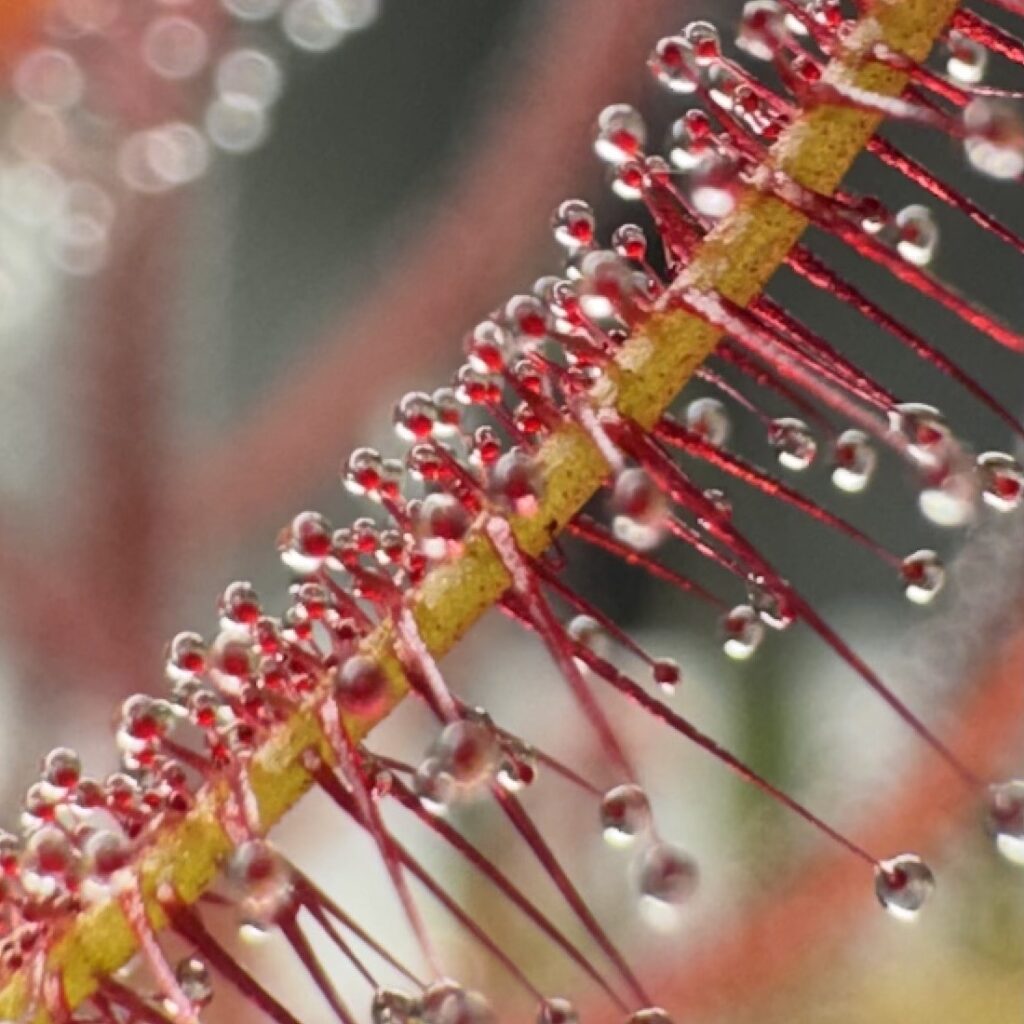
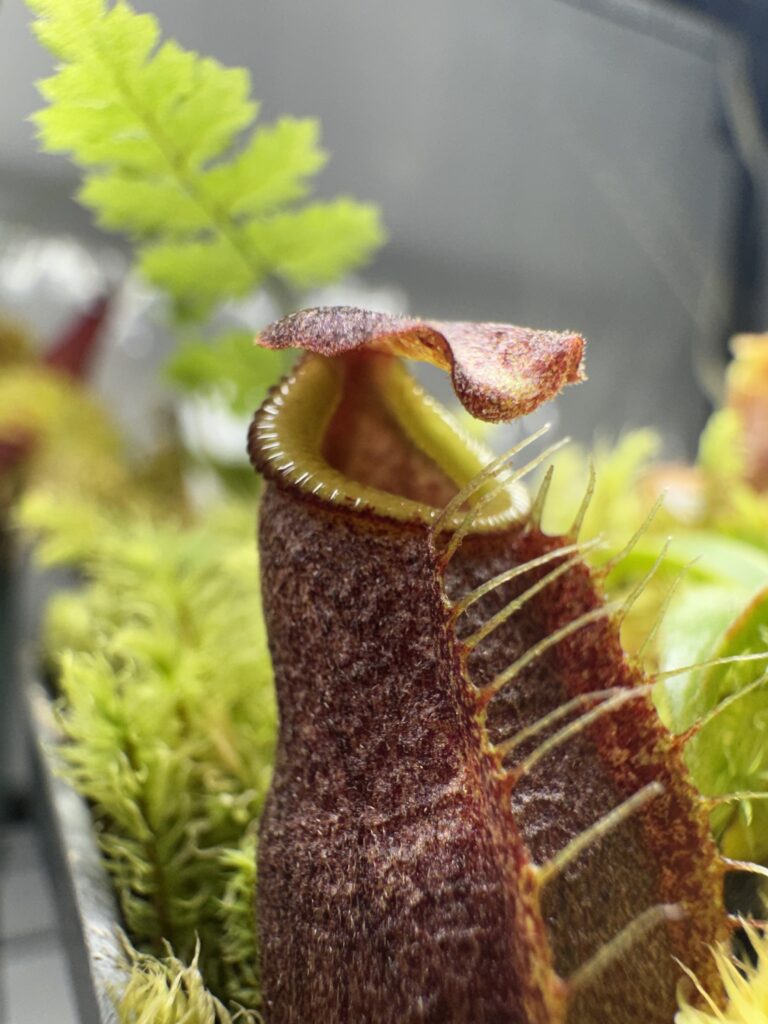
Carnivorous plants are not hard to keep alive if you follow a few simple rules: provide plenty of light, water them with pure water like distilled water, plant them in nutrient-poor soil, and keep the soil consistently moist. Many beginner-friendly species like sundews and Venus flytraps are forgiving and quickly show signs if anything is off, making them easier to manage than most houseplants.
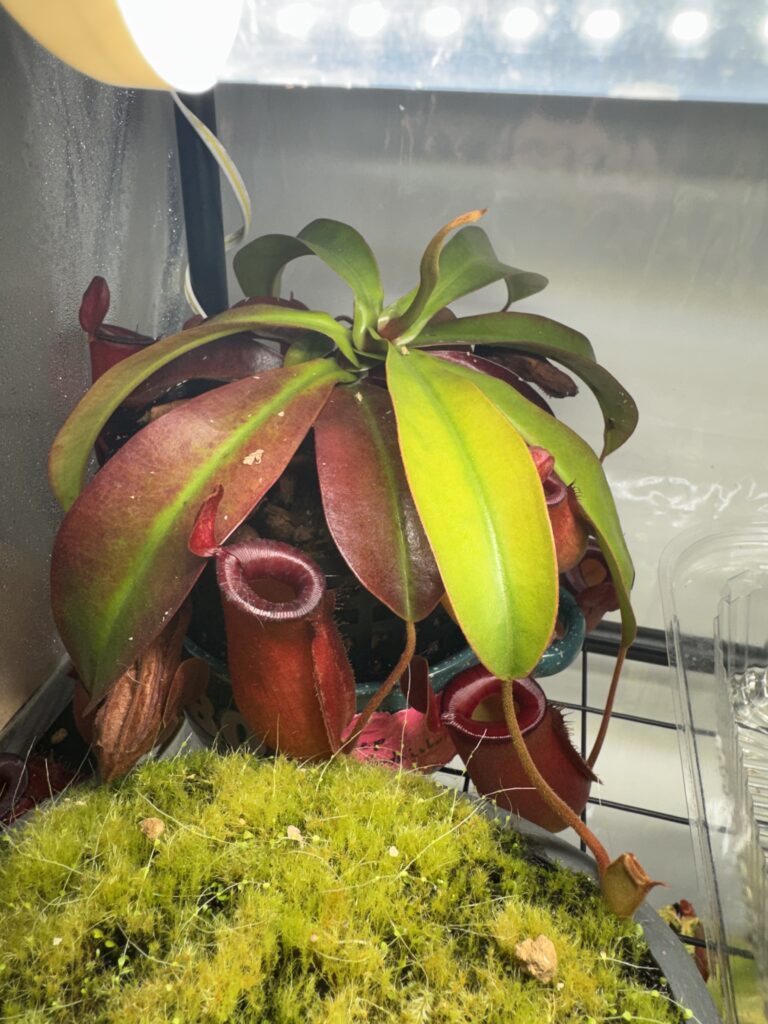
What Makes Carnivorous Plants so Different?
Carnivorous plants are adapted to grow in nutrient-poor, wet soils like bogs and wetlands. They capture insects for nutrients instead of relying on the soil, which is why normal fertilizers and potting soils can harm them. Their unique adaptations make them interesting, but caring for them is simple once you understand their natural requirements.
Beginner-Friendly Carnivorous Plants
Some carnivorous plants are much easier to keep alive than others. For beginners, these species are ideal:
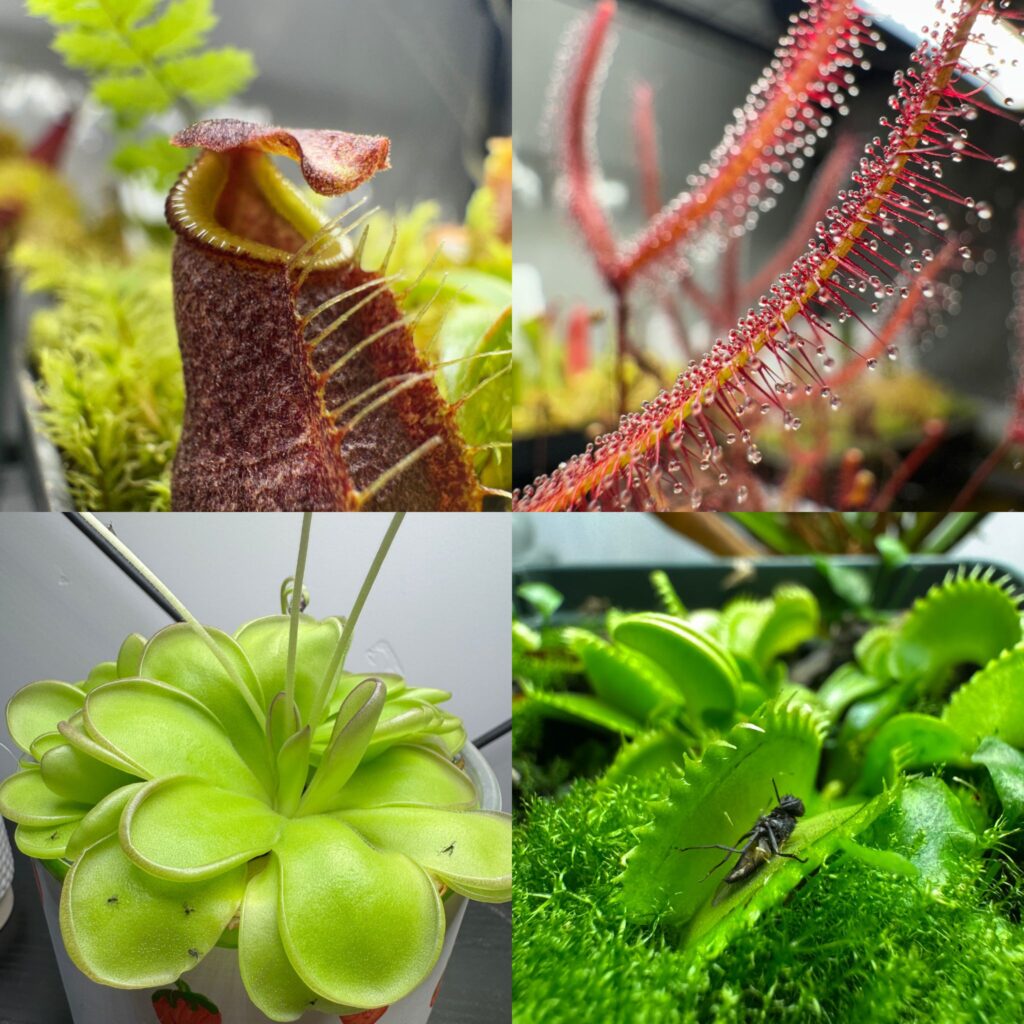
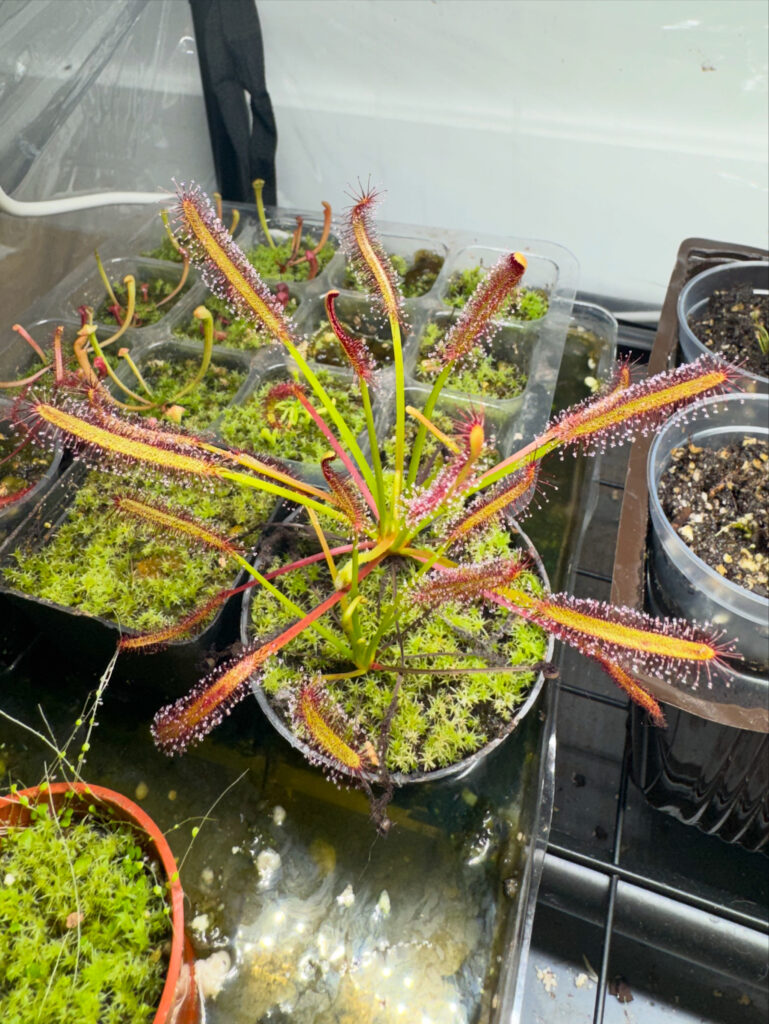
- Sundews (Drosera) (Top Right)
- Venus flytraps (Bottom Right)
- Nepenthes hybrids (tropical pitcher plants) (Top Left)
- Butterworts (Pinguicula) (Bottom Left)
These plants are resilient, respond quickly to improved care, and grow well indoors or outdoors with basic maintenance.
Light Requirements for Survival
Light is one of the most important factors in keeping carnivorous plants healthy.
- Full sun outdoors works for most species while some will burn in high light
- Strong grow lights indoors are necessary if natural sunlight is limited
- 12–16 hours of light per day is ideal
Insufficient light causes pale leaves, weak growth, and poor trap or pitcher production. While too much light can cause spots and burn leaves and kill certain plants.
Watering Carnivorous Plants Properly
Watering is critical. Carnivorous plants are very sensitive to minerals in water.
- Use distilled water, which is easy to buy and safe for most plants
- Reverse osmosis water or rainwater are also good alternatives
- Keep the soil consistently moist, often by placing pots in a shallow tray of water
Tap water can slowly harm carnivorous plants because of mineral buildup.
Soil Needs for Longevity
Carnivorous plants thrive in nutrient-poor soils.
- Mixes of peat moss and perlite work well
- Long-fiber sphagnum moss is another great option
Avoid regular potting soil, compost, or fertilized soil, as these can damage the roots and kill the plant over time.
Do They Need Bugs to Survive?
Carnivorous plants do not need insects to survive, especially if grown in nutrient-poor soil outdoors.
- Outdoor plants often catch their own insects naturally
- Indoor plants can be fed small insects occasionally
- Feeding once every 1–2 weeks is enough during active growth
Never fertilize the soil. Feeding is optional but supports stronger growth.
Temperature and Environment Tips
Most beginner species thrive at normal room temperatures:
- Typical indoor conditions work well
- Avoid placing plants near heating or cooling vents
- Some temperate species need winter dormancy, while tropical species grow year-round
Knowing your plant type ensures proper care and long-term survival.
Common Challenges and How to Fix Them
Problems usually come from a few predictable mistakes:
- Using tap water instead of distilled water
- Not providing enough light or too much light
- Allowing soil to dry out
- Using standard potting soil
- Overfeeding insects
Fixing these mistakes usually restores plant health quickly!
FAQ about Carnivorous Plants
No. Once their light, water, and soil needs are met, many beginner-friendly species are forgiving and resilient.
Yes, most beginner species thrive indoors under proper light and care.
They can survive without bugs, but occasional feeding or fertilizing improves growth of the traps and/or pitchers
While this depends heavily on the species you are keeping as a general rule keep the soil consistently moist, ideally with distilled water in a shallow tray.
Sundews (Drosera) are widely regarded as the easiest and most forgiving for beginners such as drosera capensis.