If you’re wondering how to care for Pinguicula, also known as butterwort, the key is simple: bright light, pure distilled water, and a well-draining, nutrient-poor soil mix. Pinguicula are generally forgiving carnivorous plants, but lighting and moisture balance make a huge difference in how they look, grow, and flower.
Understanding Pinguicula Basics
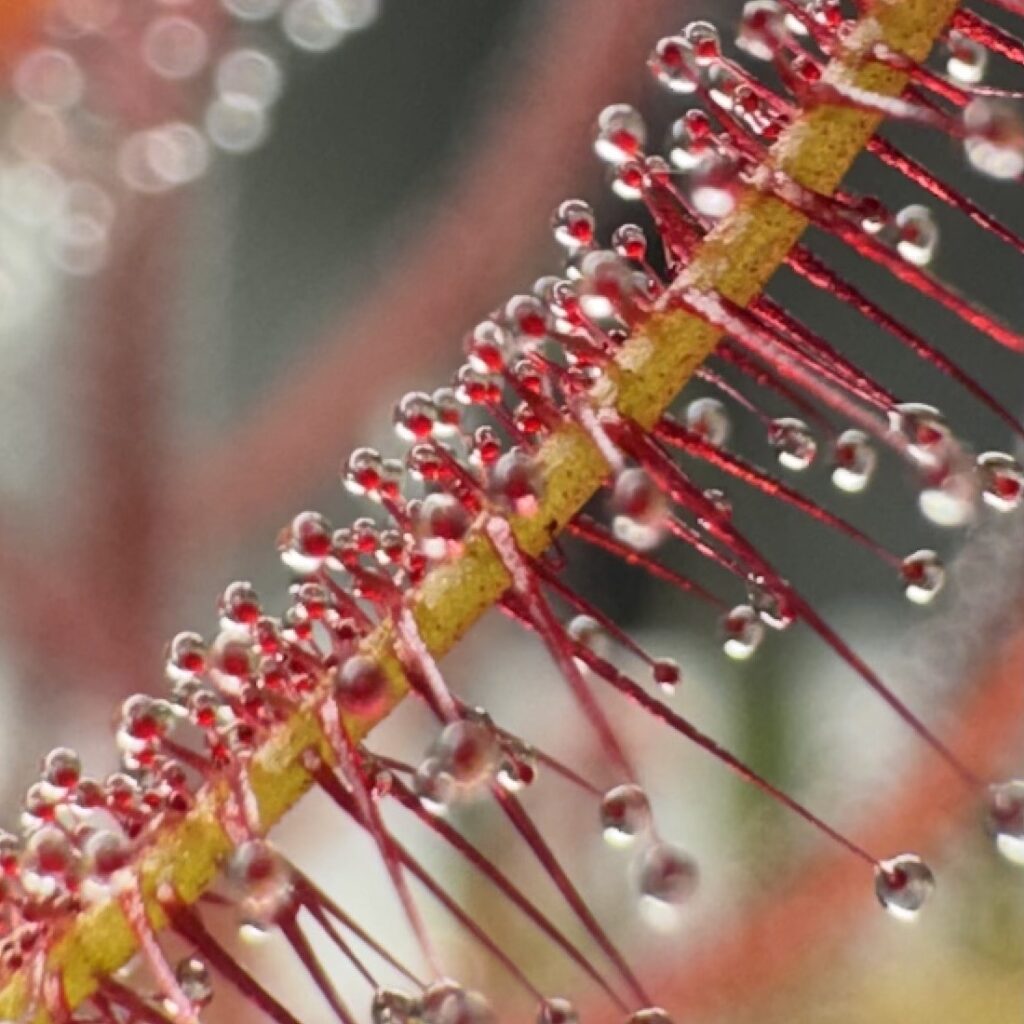
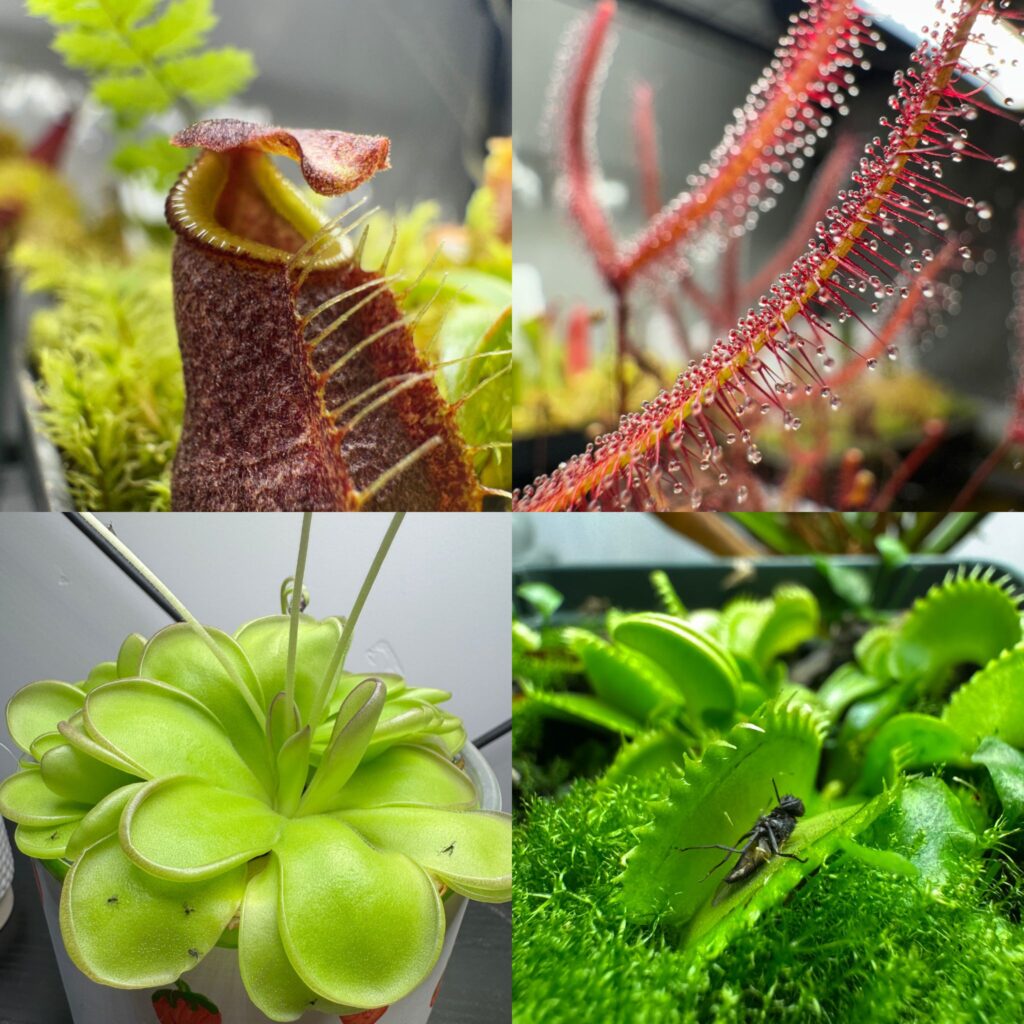
Pinguicula, commonly called butterworts, are carnivorous plants that use sticky leaves to trap small insects. Unlike Venus flytraps or pitcher plants, they don’t snap shut. Instead, their leaves are coated in a sticky mucilage that captures prey.
They absorb nutrients from insects because, like other carnivorous plants, their roots are adapted mainly for water uptake—not nutrient-rich soil.
Watering Pinguicula Properly
Water quality matters just as much for butterworts as it does for other carnivorous plants.
Always use pure water, which means:
- Distilled water (the easiest and most accessible option)
- Reverse osmosis (RO) water
- Rainwater
Tap water contains minerals that can build up in the soil and damage roots over time. Learn more here.
Pinguicula prefer moist conditions, but they do not always like being constantly soaked the way some bog species do. I prefer using a mix that allows the medium to dry slightly between waterings rather than staying overly wet.
The tray method can work, but allow the tray to dry briefly before refilling, especially for Mexican Pinguicula varieties.
My Preferred Soil Mix for Pinguicula
Soil choice plays a major role in Pinguicula care.
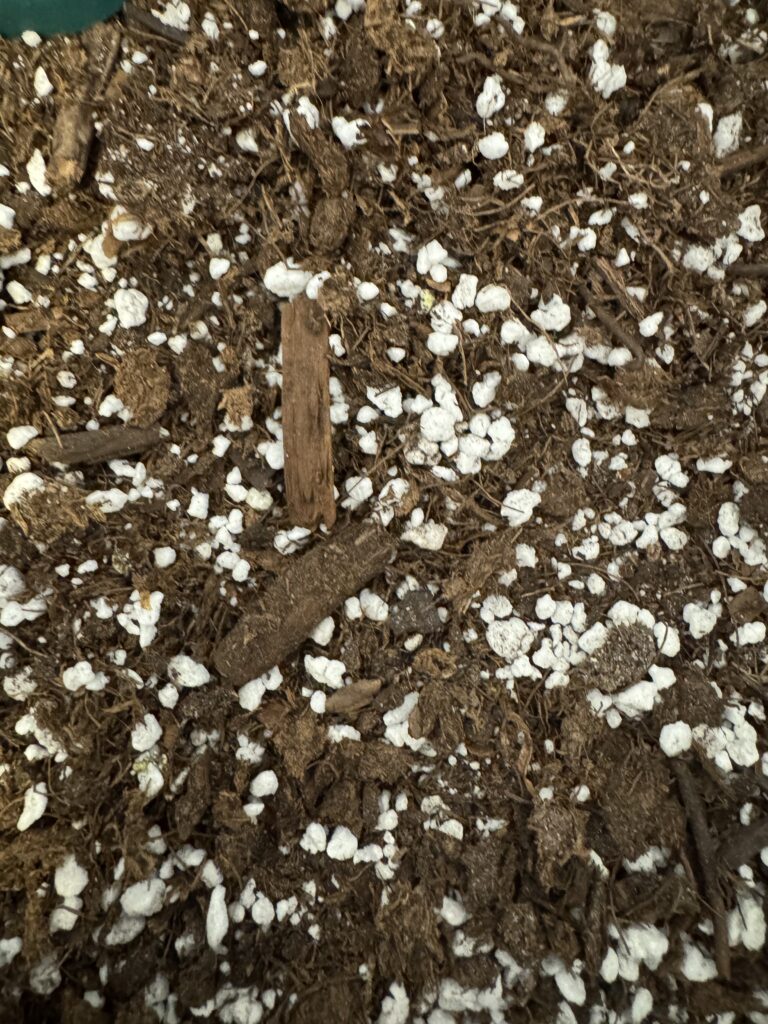
I prefer a 1:1 mix of peat moss and perlite. This works well because:
- It retains moisture without staying waterlogged
- It allows slight drying between waterings
- It remains nutrient-poor
Sphagnum moss and perlite can also work well, but I personally prefer peat and perlite because sphagnum tends to stay wetter longer, and I like the added control of letting the top layer dry slightly before watering again.
Never use regular potting soil or fertilized mixes.
Light Is Essential for Healthy Growth
Lighting is one of the most noticeable factors in how a Pinguicula looks.
Without enough light:
- Leaves may become thinner and flatter
- The plant may stretch
- Sticky dew production may decrease
- Flowering may stop
With strong, proper lighting:
- Leaves stay compact and colorful
- Dew production increases
- The plant flowers frequently
Before and After: What Proper Light Can Do
I’ve personally seen a dramatic transformation in my own Pinguicula when correcting low-light conditions.
Before:
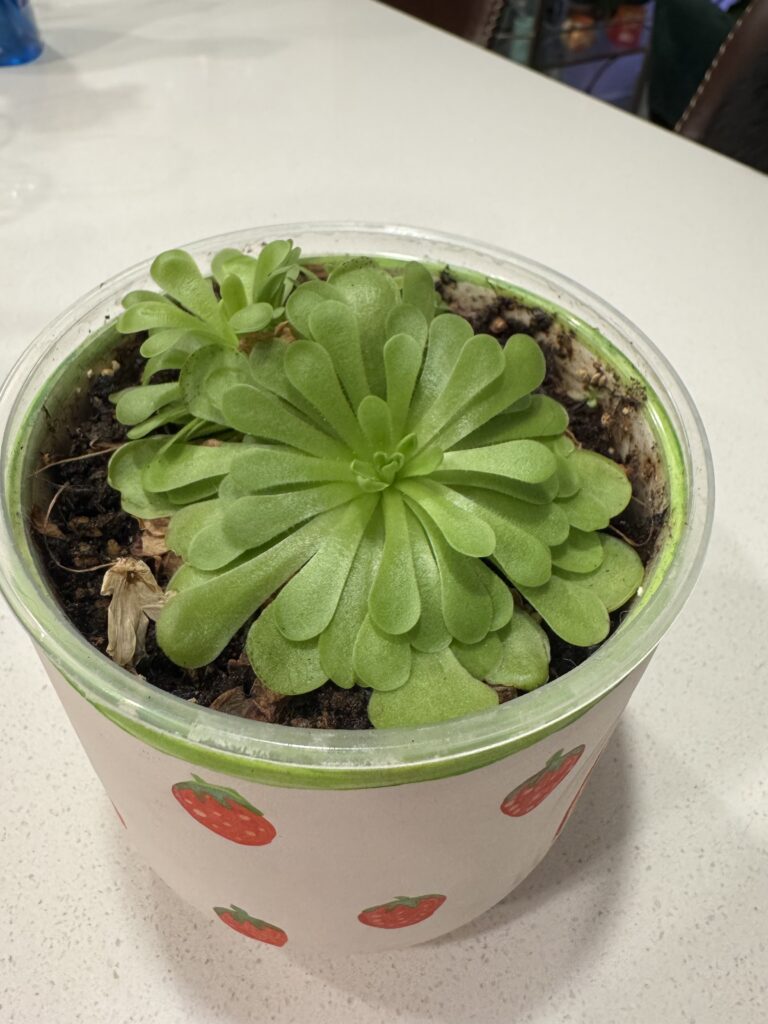
- Grown in very low light
- Leaves were flatter and less vibrant
- Minimal growth
- Rarely flowered
After increasing light exposure:
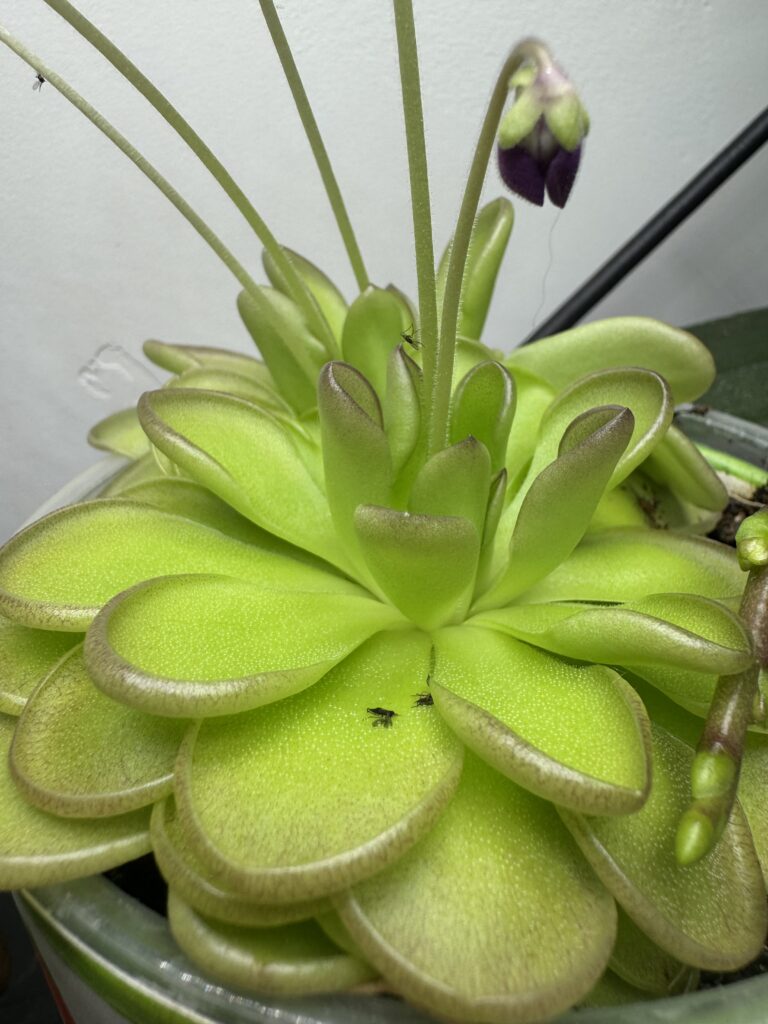
- Leaves became more compact and colorful
- Sticky surface became more noticeable
- Growth improved significantly
- It began flowering frequently
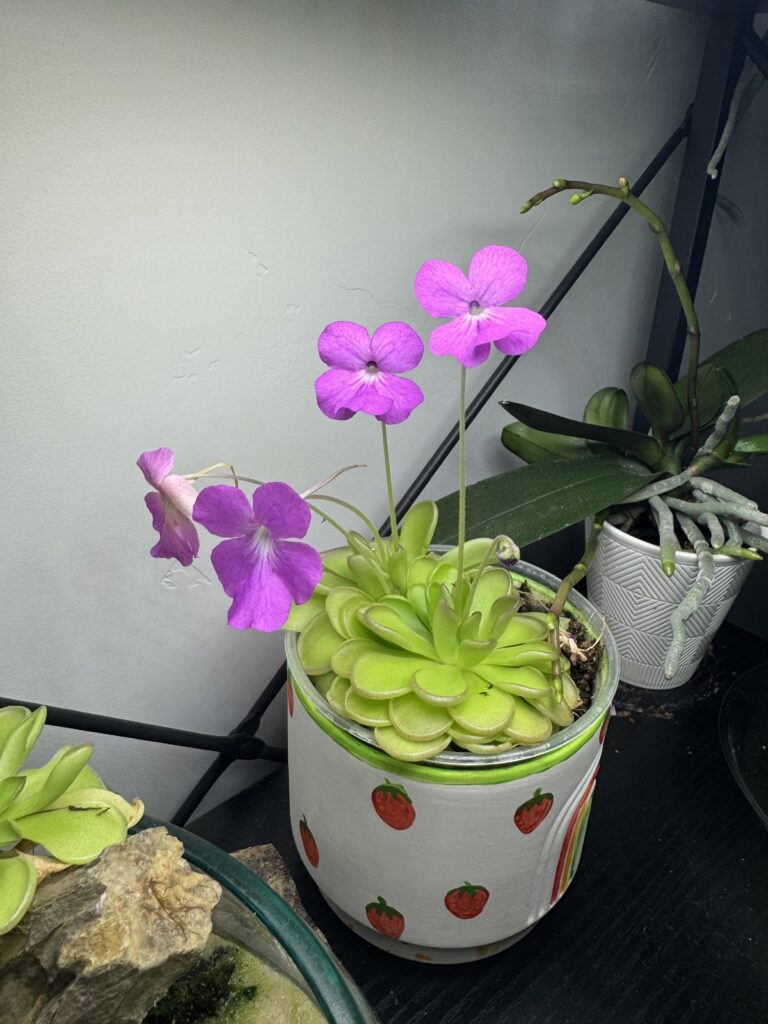
YES! This really is the same plant just months apart, this really shows how important lighting is when learning how to care for Pinguicula properly.
The Wide Range of Pinguicula Flowers
One of the best parts of growing butterworts is their flowers.
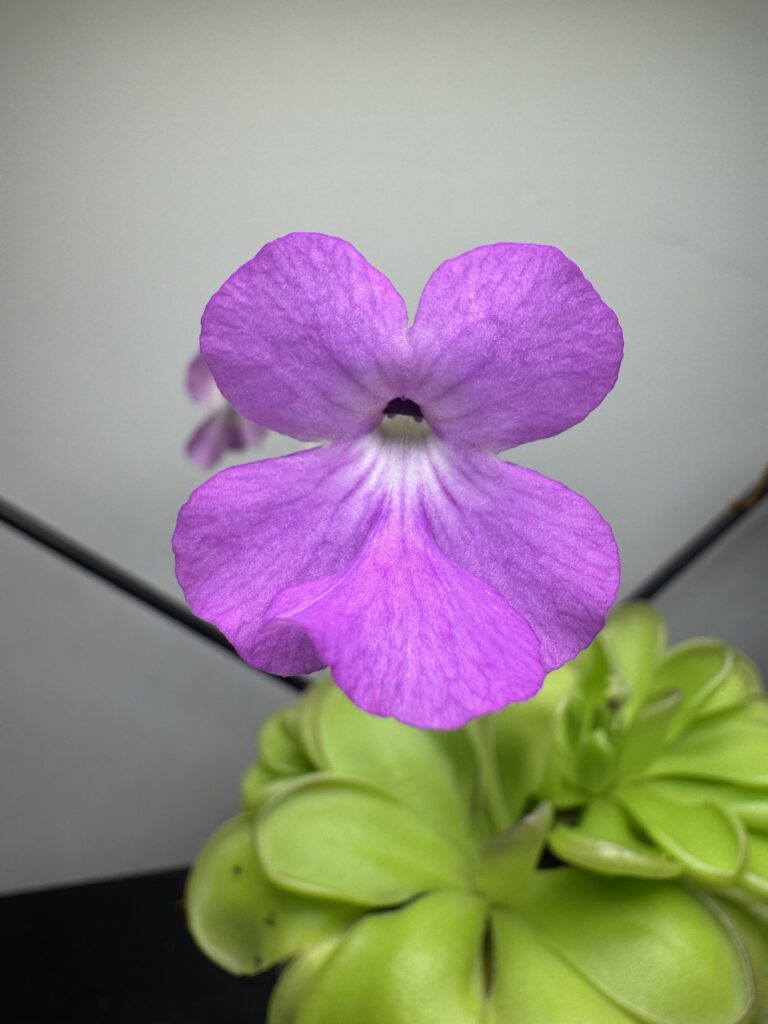
Pinguicula produce surprisingly beautiful blooms in a wide range of colors:
- Purple
- Pink
- White
- Blue
- Bi-colored varieties
Many flowers resemble small orchids and can bloom multiple times per year when conditions are right. Strong lighting and stable care greatly increase flowering frequency.
Feeding and Fertilizing Pinguicula
Butterworts naturally catch small insects on their sticky leaves.
- Indoors, they may catch fungus gnats or small flies
- Supplemental feeding with tiny insects is optional
In addition to insects, you can use fertilizers specifically made for carnivorous plants when applied carefully and according to instructions. Never use regular houseplant fertilizer in the soil.
General Pinguicula Care Tips
- Use distilled water, RO water, or rainwater only
- Keep soil nutrient-poor
- Provide bright light for compact growth and flowering
- Allow slight drying between waterings (depending on species)
- Avoid mineral buildup in the soil
While Pinguicula are generally forgiving, proper lighting and water quality make the biggest difference in their long-term health and appearance.
FAQ
Provide bright light, use distilled water, and grow in a 1:1 peat and perlite mix for controlled moisture.
Yes. Always use distilled water, reverse osmosis water, or rainwater.
Low light is usually the cause. Increase lighting and monitor new growth.
No. The soil should remain slightly moist, but depending on the species, brief surface drying between waterings is acceptable.
With proper light and stable care, many varieties can flower multiple times per year.