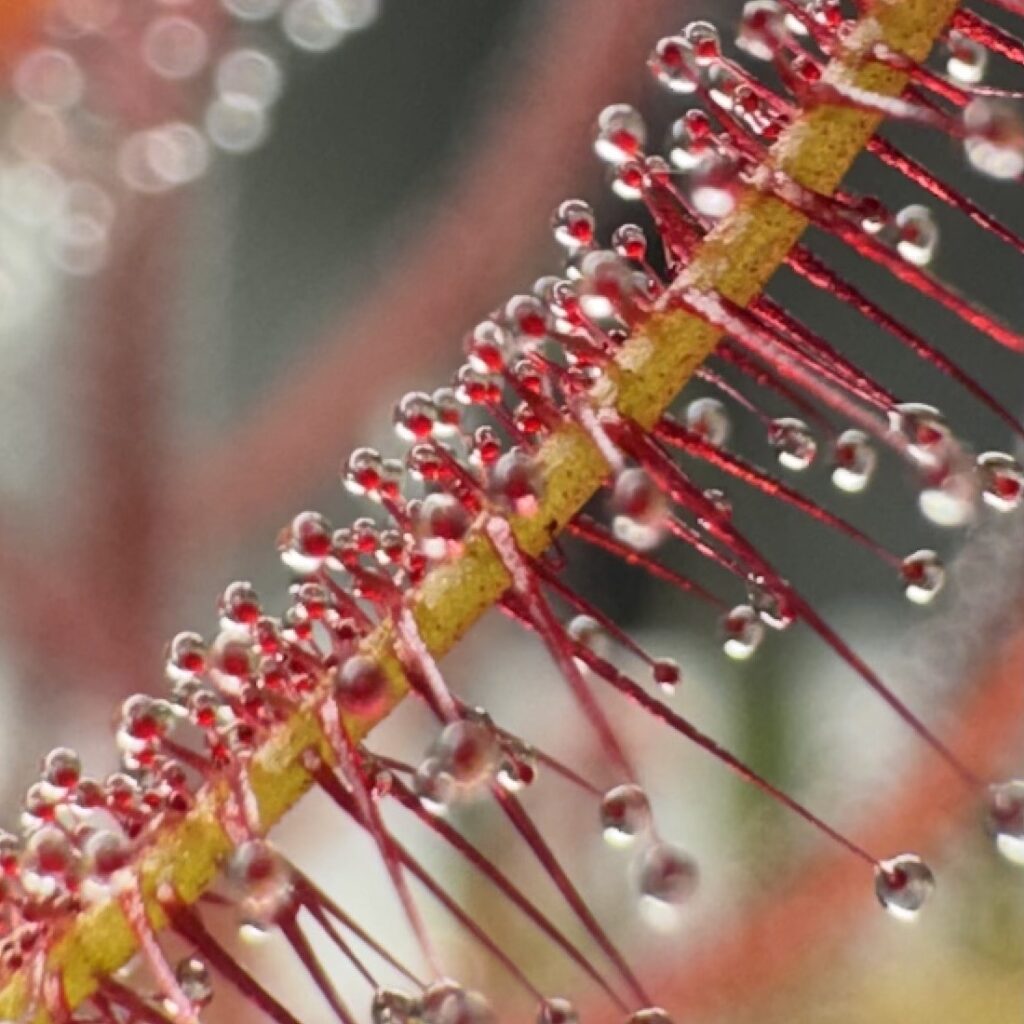
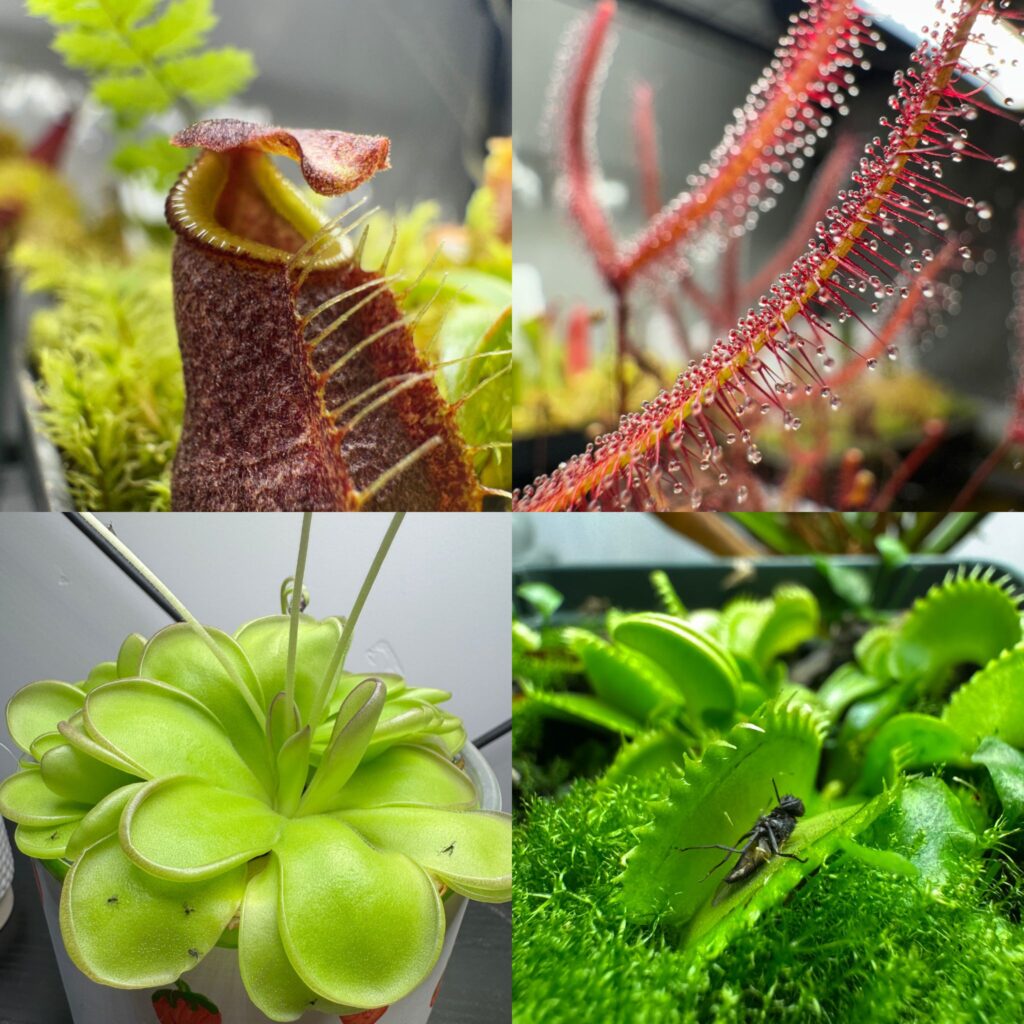
Taking care of a carnivorous plant for beginners comes down to a few simple rules: give it bright light, use pure water like distilled water, plant it in nutrient-poor soil, and keep the soil consistently moist. When those basics are met, most carnivorous plants grow well, catch bugs on their own, and require less maintenance than many common houseplants.
What Is a Carnivorous Plant?
Carnivorous plants are plants that trap and digest insects to obtain nutrients they can’t get from their natural soil. In the wild, they grow in bogs and wetlands where the soil is extremely poor. This is why carnivorous plant care is different from normal houseplant care and why fertilizer and regular soil can be harmful.
Common carnivorous plants include sundews (Drosera), Venus flytraps, tropical pitcher plants (Nepenthes), and butterworts (Pinguicula).
Best Carnivorous Plants for Beginners
Some carnivorous plants are easier to grow and more forgiving than others, making them ideal for beginners.
Good beginner-friendly options include:
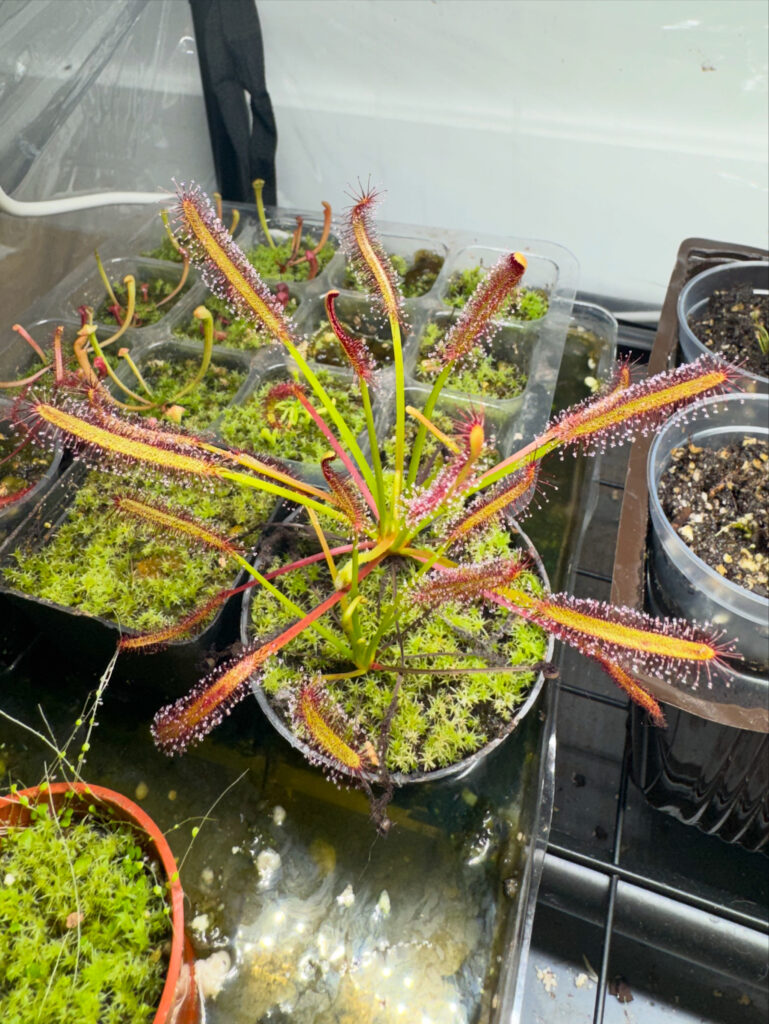
- Drosera or Sundews (Drosera Capensis is very beginner-friendly, pictured above)
- Venus flytraps
- Nepenthes hybrids
- Pinguicula (butterworts)
These plants adapt well to indoor growing, clearly show signs of stress, and recover quickly once conditions are corrected.
How Much Light Do Carnivorous Plants Need?
Bright light is the most important factor in caring for carnivorous plants.
- Outdoors, many species prefer full sun
- Indoors, strong grow lights work best
- Aim for 12–16 hours of light per day (This largely depends on species and type pf plant since some prefer low light)
If a carnivorous plant isn’t growing well or producing traps, pitchers, or sticky leaves, insufficient light is usually the cause.
How to Water Carnivorous Plants
Water quality is critical for carnivorous plants. Check out my other blog on how to water carnivorous plants here!
- Use distilled water, which is the most accessible and commonly used pure water
- Reverse osmosis water or rainwater are also safe options
- Keep the soil consistently moist
- Many species do well sitting in a shallow tray of water
Tap water contains minerals that build up in the soil over time and can slowly damage or kill carnivorous plants.
What Soil Do Carnivorous Plants Need?
Carnivorous plants must be grown in nutrient-poor soil that mimics their natural environment.
Recommended soil mixes include:
- Peat moss and perlite
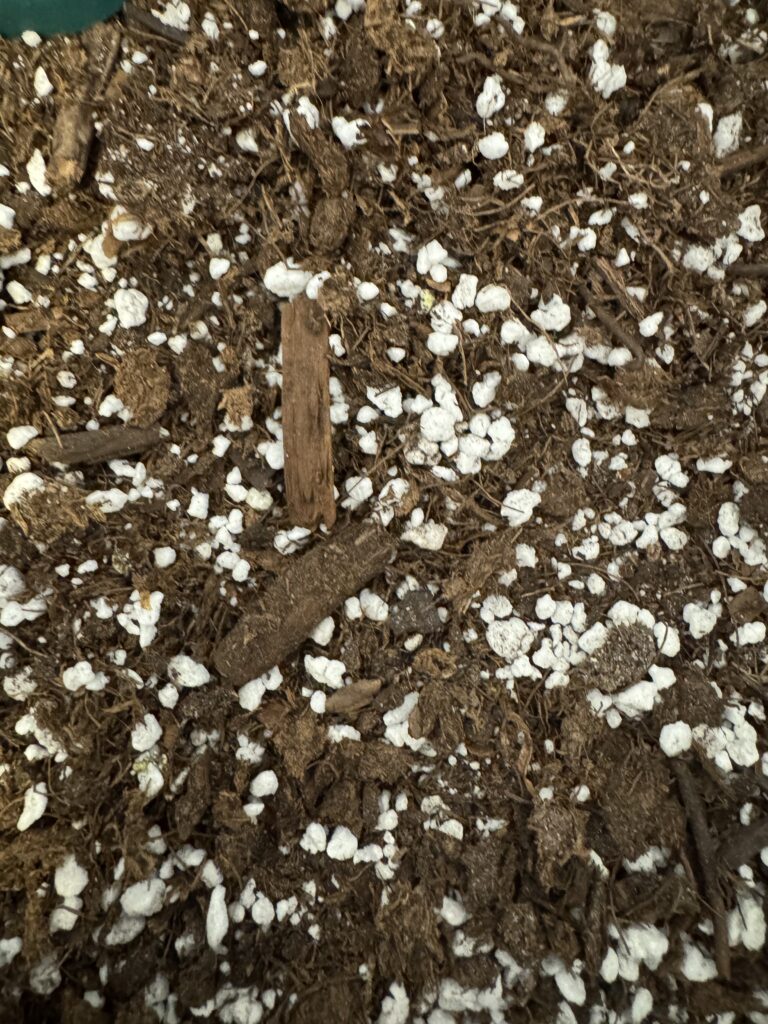
- Long-fiber sphagnum moss (with or without pearlite, I prefer with it!)
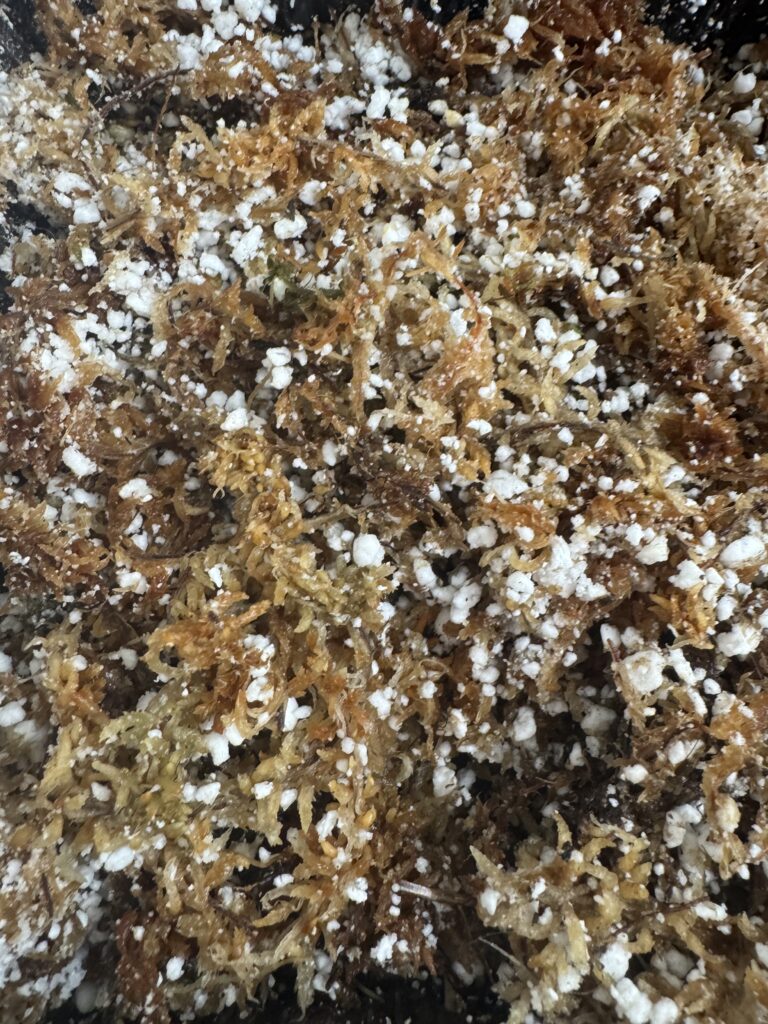
Never use regular potting soil, compost, or fertilized mixes, as these are too rich in nutrients and will harm the roots.
Do Carnivorous Plants Need to Eat Bugs?
Carnivorous plants do not need frequent feeding, especially when grown outdoors.
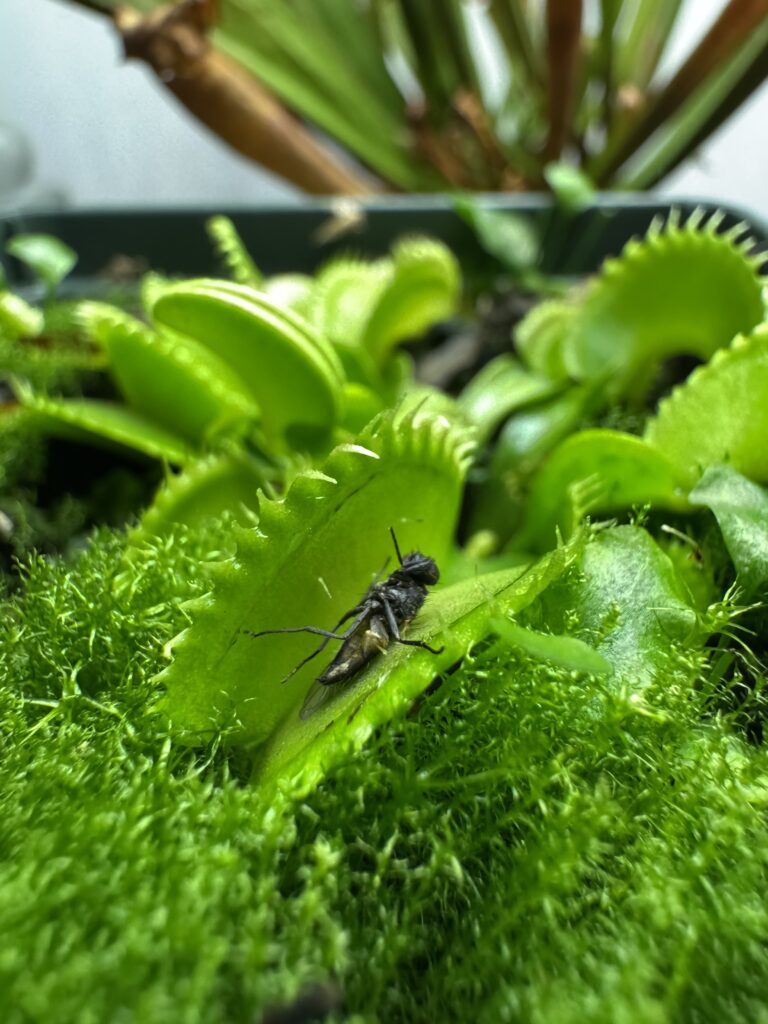
- Outdoor plants usually catch enough insects on their own
- Indoor plants can be fed small insects occasionally
- Feeding once every 1–2 weeks is more than enough
Never fertilize the soil. Feeding, if done, should only occur during active growth. Check
Temperature and Environment Basics
Most beginner-friendly carnivorous plants grow well at normal room temperatures.
- Typical indoor temperatures are suitable
- Avoid placing plants near heating or air conditioning vents
- Some species require winter dormancy, while others grow year-round
Understanding whether your plant is tropical or temperate helps prevent long-term care issues.
Common Beginner Mistakes
Most beginner problems come from a few common mistakes:
- Using tap water instead of distilled water
- Not providing enough light
- Letting the soil dry out
- Using regular potting soil
- Overfeeding insects
Correcting these issues often leads to quick and noticeable improvement.
No. Once their basic needs are met, carnivorous plants are often easier than many traditional houseplants.
Yes, most beginner carnivorous plants grow very well indoors with proper lighting.
They can survive without bugs, but occasional feeding supports stronger growth.
The soil should stay consistently moist, often by keeping the pot in a shallow tray of distilled water.
Sundews are widely considered one of the easiest and most forgiving carnivorous plants to grow.