If you’re wondering how to care for Nepenthes, the good news is that most pitcher plants are fairly forgiving as long as their basic needs are met. In simple terms, Nepenthes need pure water like distilled water, a nutrient-poor and airy substrate, bright but gentle light, and conditions that match their species type. While care can vary from species to species, these general guidelines will work for most Nepenthes, especially common hybrids grown indoors.
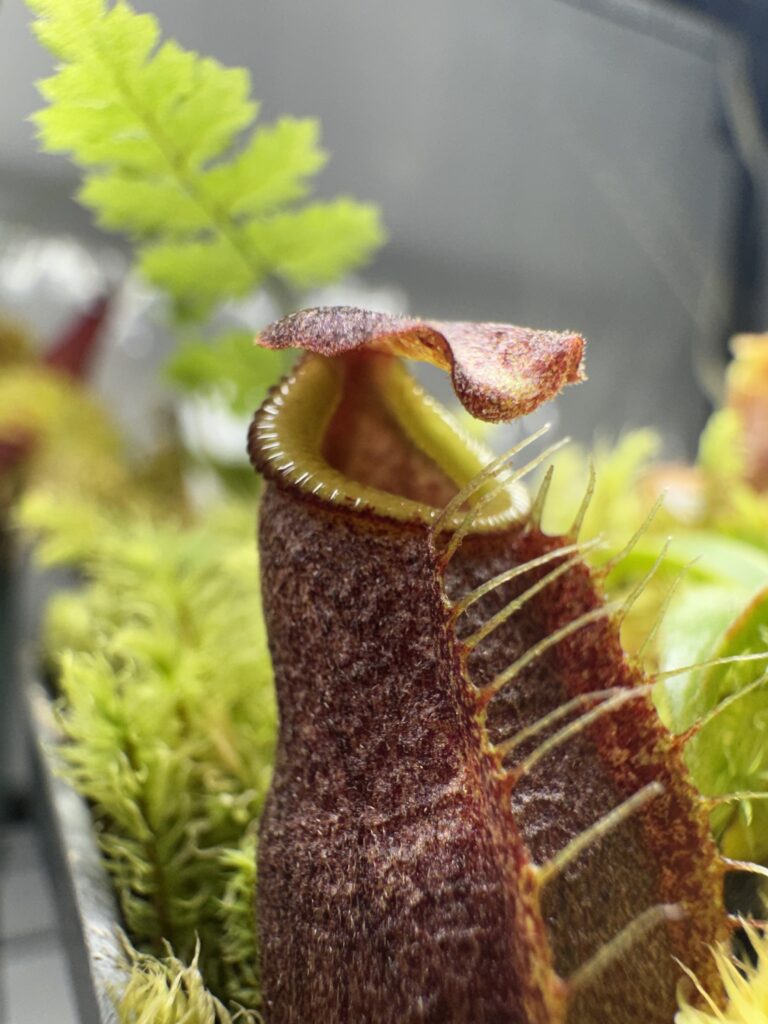
Understanding Nepenthes and Species Differences
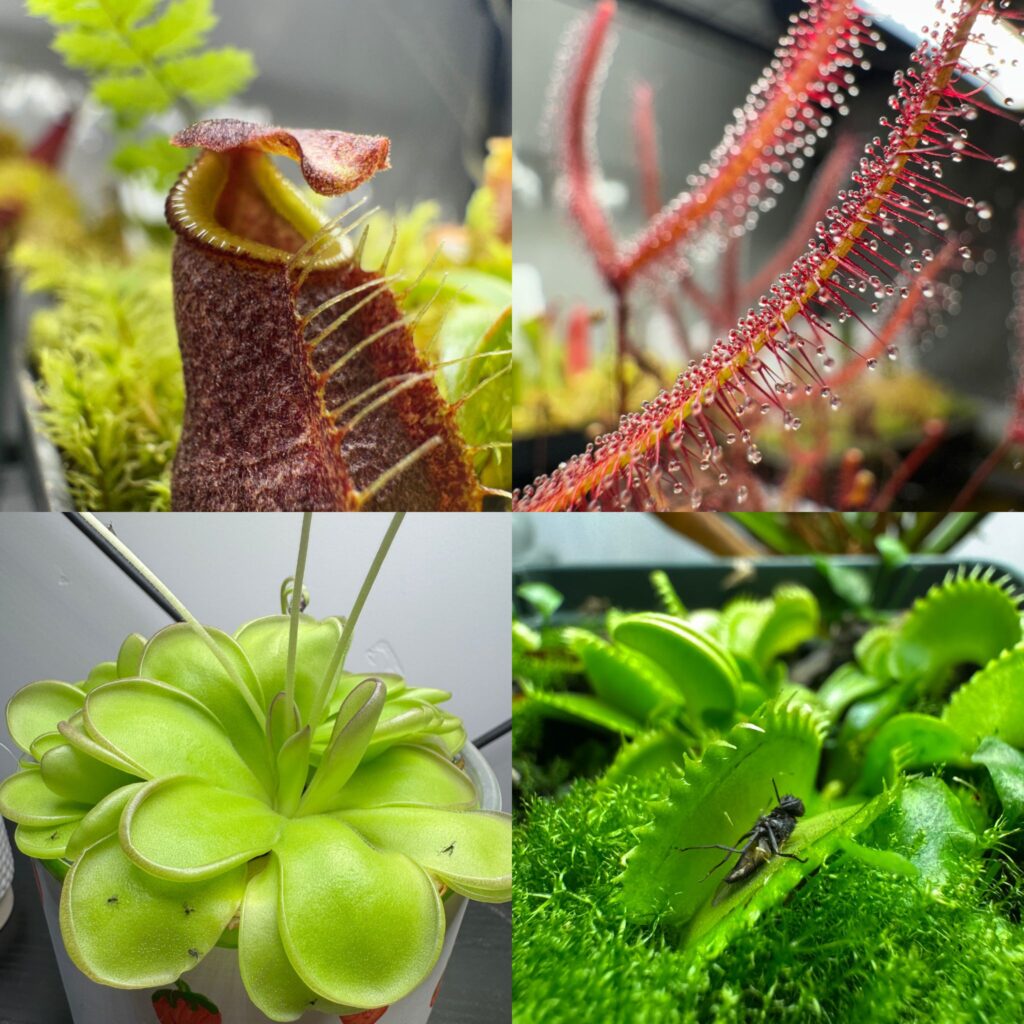
Nepenthes are tropical carnivorous plants that trap insects using hanging pitchers filled with digestive fluid. Unlike many other carnivorous plants, they are not bog plants and should never sit in standing water.
Care does vary depending on the species, especially when comparing highland and lowland Nepenthes:
- Highland Nepenthes prefer cooler temperatures, especially at night
- Lowland Nepenthes prefer consistently warm temperatures day and night
Many commonly sold Nepenthes are hybrids that tolerate a wider range of conditions, but it’s still important to understand what type you have.
Water Requirements for Nepenthes
Water quality is one of the most important parts of caring for pitcher plants.
Nepenthes are extremely sensitive to minerals and nutrients in water. Always use pure water, which means:
- Distilled water (the most commonly purchased and easiest option)
- Reverse osmosis (RO) water
- Rainwater
Tap water contains minerals that can burn the roots over time, leading to slow decline or sudden failure. Water your Nepenthes thoroughly and allow excess water to drain. The substrate should stay evenly moist, never dry and never waterlogged.
Substrate and Soil Mix
Nepenthes need a nutrient-poor, well-aerated substrate that holds moisture while allowing airflow to the roots.
A mix that works very well for me is:
- 1:1 sphagnum moss and perlite
This substrate:
- Retains moisture without becoming compacted
- Drains well to prevent root rot
- Mimics the low-nutrient conditions Nepenthes are adapted to
Avoid regular potting soil, compost, or any mix with added nutrients.
Light Requirements
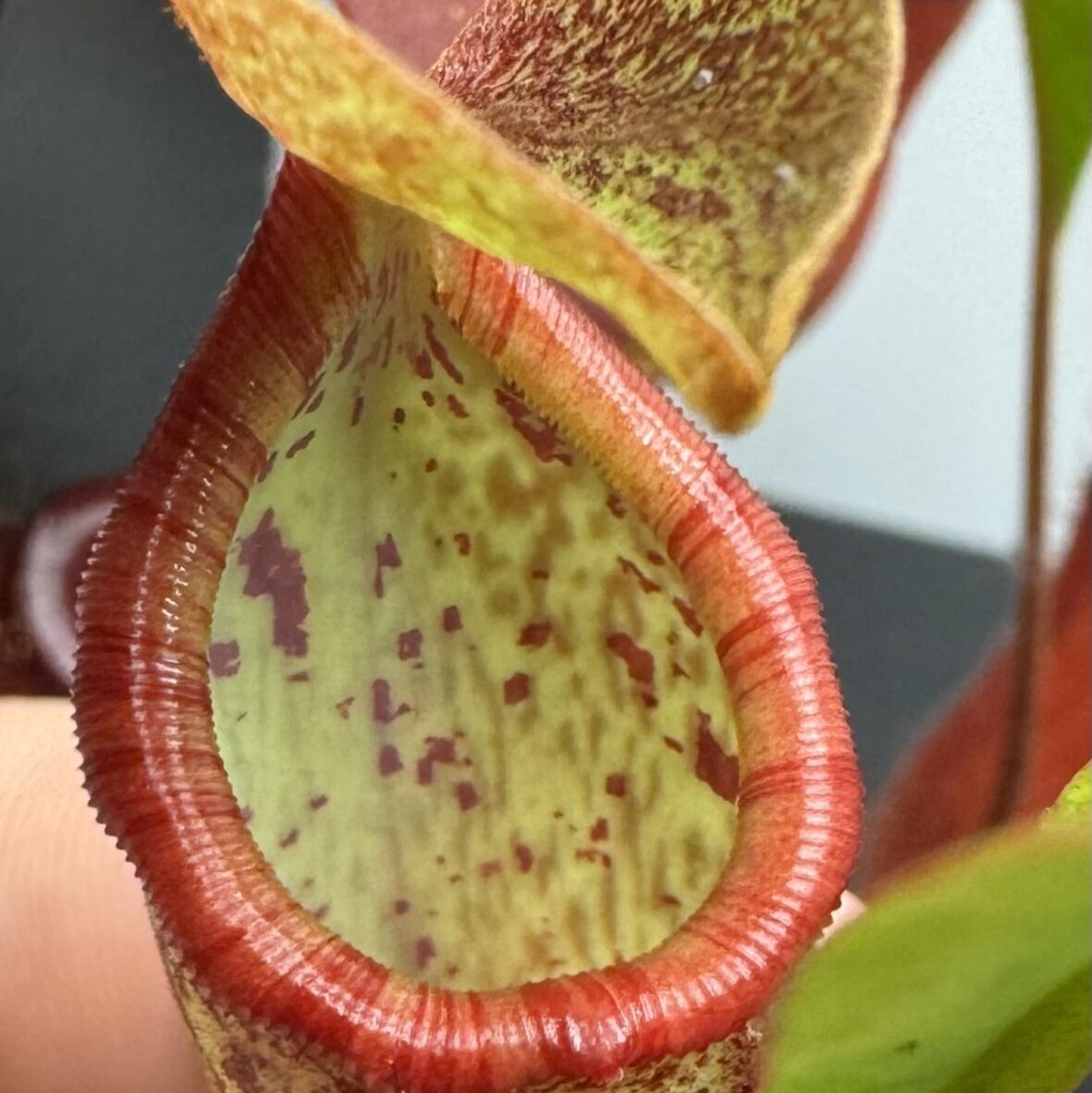
Nepenthes prefer bright light, but too much direct sun can cause damage.
- Bright indirect light is ideal
- Gentle morning sun is usually fine
- Strong midday or afternoon sun can burn leaves
If light is too intense, leaves may turn red, scorch, or dry out. If light is too low, the plant may grow slowly and stop producing pitchers.
Temperature and Humidity
As tropical plants, Nepenthes appreciate stable conditions.
- Moderate to high humidity helps with pitcher formation
- Avoid sudden temperature swings
- Match temperatures to whether the plant is highland or lowland
Good airflow is also important to prevent fungal issues.
Feeding and Fertilizing Nepenthes
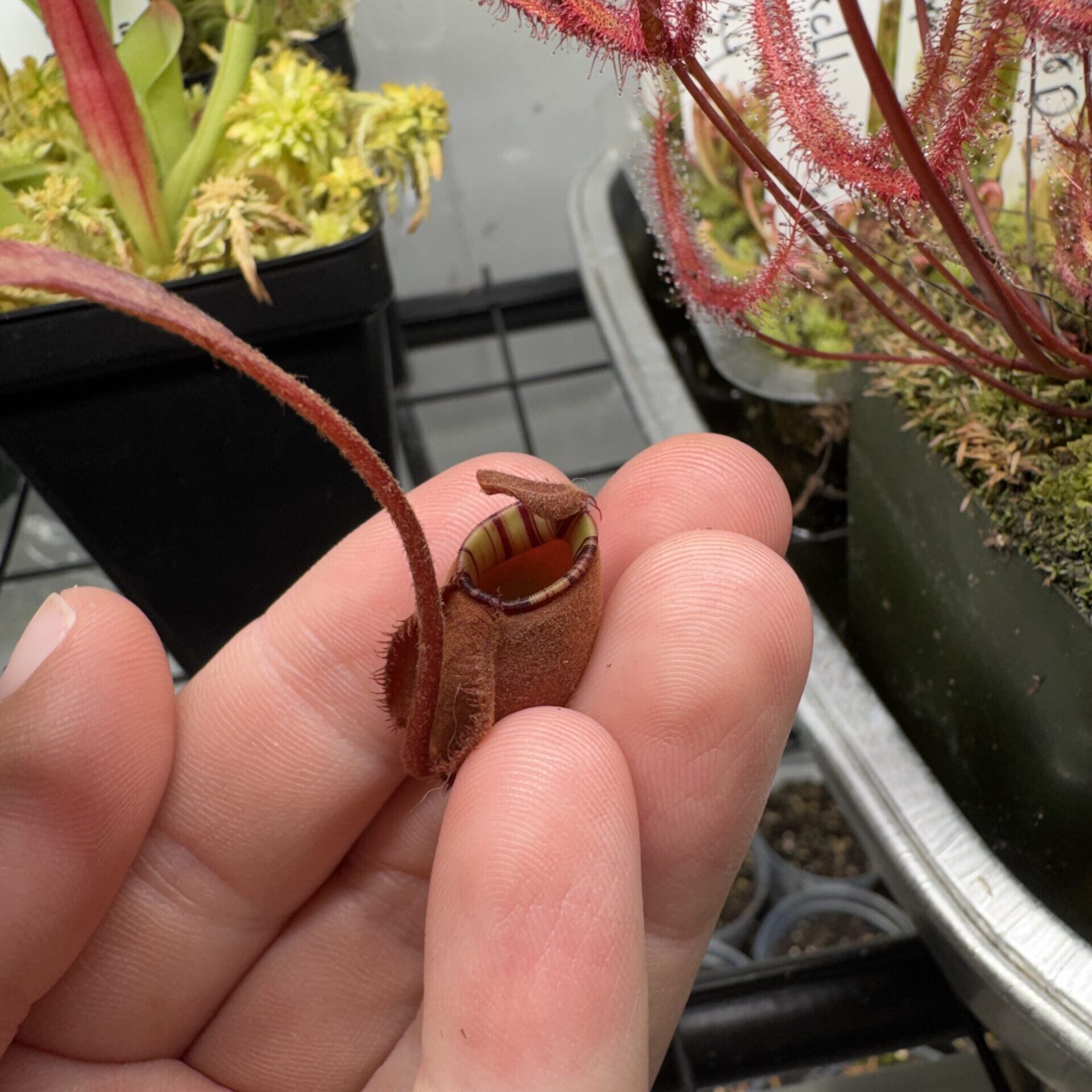
Nepenthes naturally get nutrients by catching insects in their pitchers.
- Outdoor plants often feed themselves
- Indoor plants can be given occasional small insects
In addition to insects, Nepenthes can also be fertilized using products specifically made for carnivorous plants. These are formulated to be safe when used correctly and can support growth without damaging the roots. Never use regular plant fertilizer or fertilize the soil directly unless the product is designed for carnivorous plants.
Common Nepenthes Care Mistakes
- Using tap water instead of distilled water
- Letting the plant sit in standing water
- Using nutrient-rich or compacted soil
- Exposing the plant to harsh direct sunlight
- Ignoring species-specific temperature needs
While Nepenthes are generally forgiving, consistent mistakes will eventually stress the plant and stop pitcher production.
FAQ
Yes, many common Nepenthes and hybrids are beginner-friendly if basic care needs are met.
Use distilled water, reverse osmosis water, or rainwater only.
Yes, many Nepenthes do very well indoors with proper light, humidity, and water quality.
Low humidity, insufficient light, or stress from improper water or temperature are the most common reasons.
No. Care varies by species, especially between highland and lowland Nepenthes.
Pingback: How Do You Take Care of a Carnivorous Plant for Beginners? - Carnivorous Supply