Carnivorous plants can die for a lot of reasons, and often more than one issue combines to weaken the plant over time. Unlike many ordinary houseplants, carnivorous plants have very specific environmental needs—especially when it comes to water quality, light, soil, and seasonal behavior. In this guide, we’ll break down the most common causes of carnivorous plant death so you can diagnose what went wrong and keep your next plant healthy.
Water Quality: Minerals That Burn Roots
One of the biggest reasons carnivorous plants die is mineral toxicity. These plants are adapted to nutrient-poor bogs, which means their roots are designed to absorb water only, not dissolved minerals. When you use tap water or water with fertilizer:
- Minerals build up in the soil
- Roots become damaged or “burned”
- Plant growth slows or stops
- Traps, leaves, or pitchers deteriorate
Always use pure water like distilled water, reverse osmosis (RO) water, or rainwater. Tap water—even if it looks clean—almost always contains minerals that harm carnivorous plants over time. Learn more about carnivorous plant watering here!
Overwatering or Underwatering
Carnivorous plants are adapted to very specific moisture conditions, and both extremes can kill them:
Overwatering
- Leaves turn yellow or rot
- Soil stays soggy with no air
- Roots suffocate and decay
This often happens when plants sit in deep water for too long or when soil doesn’t drain properly.
Underwatering
- Leaves dry out
- Traps stop functioning
- Plant shrinks or wilts
For many bog species like sundews (Drosera) and Sarracenia, the tray method keeps soil consistently moist: place the pot in a shallow tray (about 1–2 inches) of distilled water so the plant wicks moisture upward without drowning.
Light Problems: Too Little or Too Much
Light is essential, but the wrong lighting can kill a carnivorous plant:
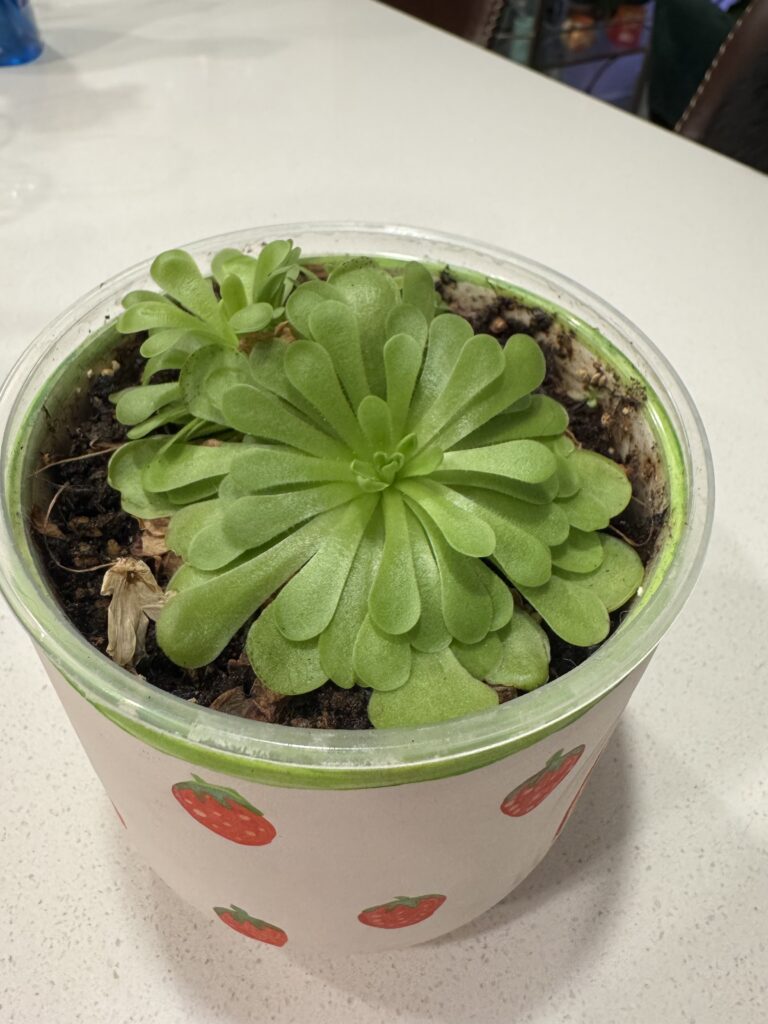
Pictured above is a ping with too little light.
- Too little light: Plants become weak, pale, and fail to produce traps or pitchers
- Too much intense sun: Leaves can scorch, especially in hot, dry conditions or through glass
Most temperate species need lots of bright light or sunshine to thrive, while tropical species may prefer bright indirect light or supplemental grow lights indoors.
Soil That’s Too Rich or Incorrect
Carnivorous plants need nutrient-poor soil because their roots can’t handle fertilizers:
- Regular potting soil contains nutrients that burn roots
- Soil too dense can suffocate roots
- Fast-draining soil that still holds moisture is ideal
Good soil options include peat moss mixed with perlite or long-fiber sphagnum moss. Avoid compost, fertilized soil, or mixes with added nutrients.
Dormancy Confusion in Temperate Species
Many carnivorous plants require a winter dormancy period. This is especially true for:
- Venus flytraps (Dionaea)
- North American pitcher plants (Sarracenia)
- Temperate sundews (Drosera)
If you keep these plants in conditions that are too warm or lit year-round, they may never enter dormancy. This can exhaust the plant and lead to decline because dormancy is a natural survival cycle. During dormancy, leaves may die back, but the rootstock stays alive and regrows in spring.
Pests and Disease
Carnivorous plants are not immune to pests and pathogens:
- Aphids, spider mites, and fungus gnats can weaken plants
- Fungal infections from poor airflow or overly wet soil
- Rot from bacterial infection
Check plants regularly for pests and maintain good ventilation to reduce disease risk.
Temperature and Humidity Stress
Different species have different temperature and humidity needs:
- Tropical species (e.g., Nepenthes) need warm temperatures and moderate–high humidity
- Temperate species survive in cooler conditions and need dormancy
- Rapid swings in temperature or humidity can shock and kill sensitive plants
Match your species’ natural climate to your indoor environment as closely as possible.
Feeding Mistakes
Carnivorous plants don’t need regular feeding like typical houseplants because they get nutrients from insects. Overfeeding or adding fertilizer to the soil can harm or kill them:
- Never add fertilizer to the soil
- Indoors, feed only a few small insects occasionally
- Too much feeding stresses the plant
Why Some Species Are More Sensitive
Some carnivorous plants are naturally hardier, while others are more finicky:
- Sundews (Drosera): Generally forgiving
- Venus flytraps: Require dormancy and specific light
- Cephalotus (Australian pitcher plant): Very sensitive to watering and soil conditions
- Nepenthes: Need well-draining, moist soil and stable humidity
Understanding the quirks of your specific species helps prevent die-off.
FAQ
Sudden death can result from mineral buildup in the soil, severe rot, pest infestation, or a rapid environmental change.
Yes. Minerals and nutrients in tap water or fertilized water can burn roots and cause long-term decline.
Wilting often indicates underwatering, overwatering, or root rot. Check soil moisture and water source quality.
Yes. All carnivorous plants should be watered with distilled water, reverse osmosis water, or rainwater.
Not necessarily. If it’s entering dormancy or recovering from stress, it may regrow new traps later.