Carnivorous plants are extremely sensitive to minerals and nutrients in their soil and water. For safe watering, use pure water, such as distilled water, reverse osmosis (RO) water, or rainwater. Tap water, well water, or water with fertilizer can burn the roots, slowly damage the plant, and even kill it. This is also why carnivorous plants rely on insects to get their nutrients—their roots are designed to absorb moisture only, not minerals.
Why Minerals and Fertilizers Are Harmful
Carnivorous plants evolved in boggy, nutrient-poor soils. Their roots are adapted to absorb only water, not minerals or fertilizers. If the roots come into contact with minerals or nutrient-rich water:
- Root tissue can burn
- Growth slows dramatically
- Traps, leaves, or pitchers may die
- Prolonged exposure can kill the plant
This is why proper water choice is critical. Even small amounts of calcium, magnesium, or salts in tap water can harm them over time.
Distilled Water: The Most Accessible Option (What I Use!)
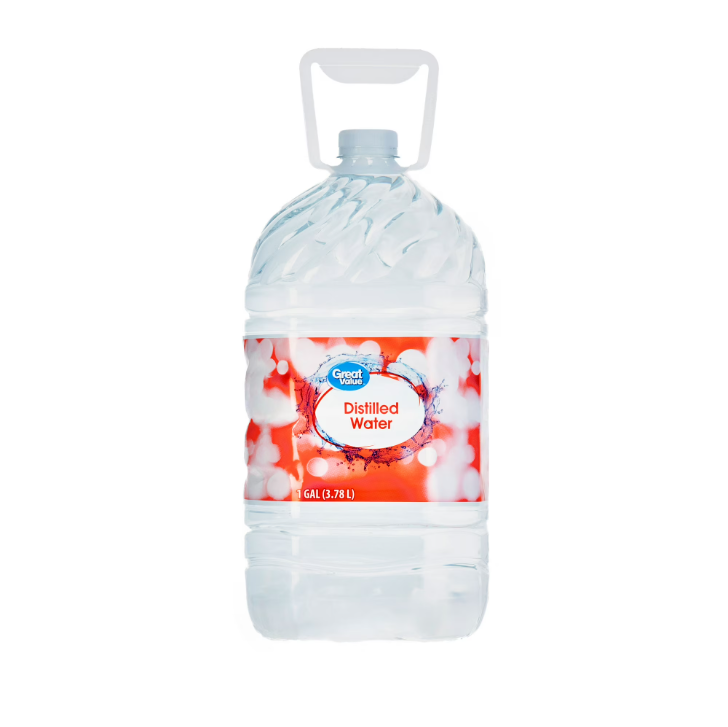
Distilled water is the easiest type of pure water to obtain for carnivorous plants:
- Available in most grocery stores or hardware stores
- Free of minerals and salts
- Safe for all carnivorous plant species
Using distilled water ensures that your plants’ roots stay healthy and avoids mineral buildup in the soil.
Reverse Osmosis (RO) Water Explained
Reverse osmosis water is another safe alternative:
- Water is filtered through a semi-permeable membrane to remove minerals
- Very low in dissolved salts and minerals, similar to distilled water
- Excellent for sensitive species like Cephalotus, Nepenthes, and temperate Drosera
RO water works just as well as distilled water but may require a filtration system at home.
Rainwater as a Natural Alternative
Rainwater is naturally soft and low in minerals, making it ideal for carnivorous plants:
- Free from most dissolved salts if collected carefully
- Can be used directly for watering soil or tray method
- Mimics their natural bog environment
Collect rainwater in clean containers and avoid storing it in metal or contaminated tanks.
How Carnivorous Plants Get Nutrients from Insects
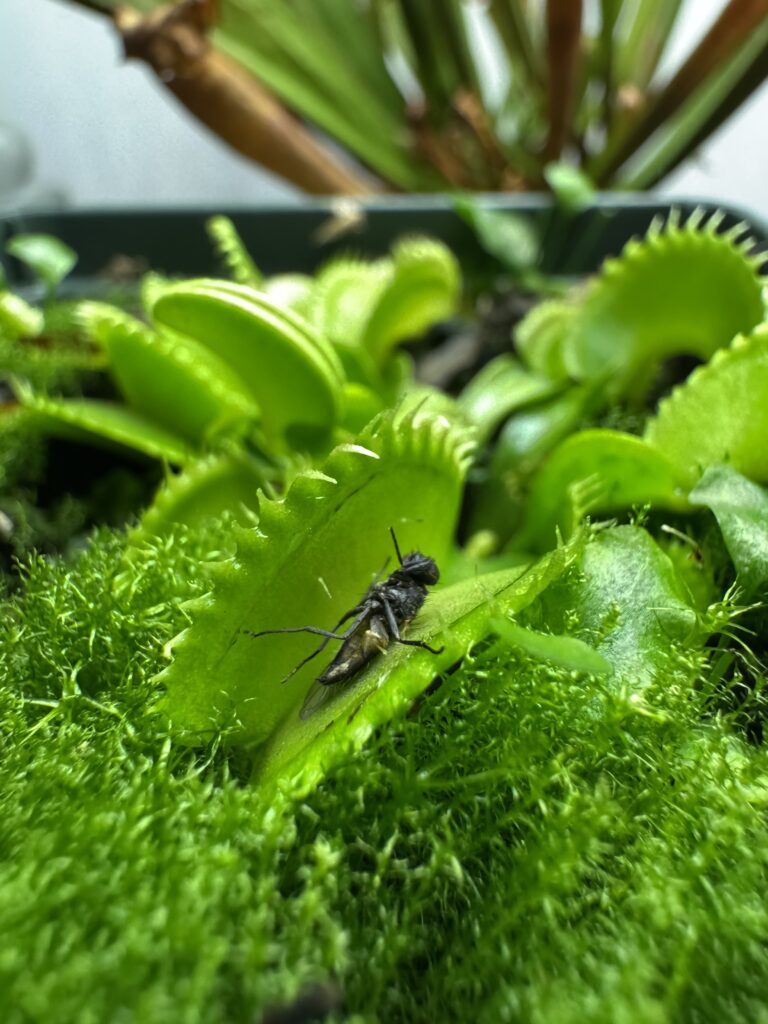
Since carnivorous plants cannot absorb minerals from soil or water, they capture insects to get nutrients like nitrogen and phosphorus.
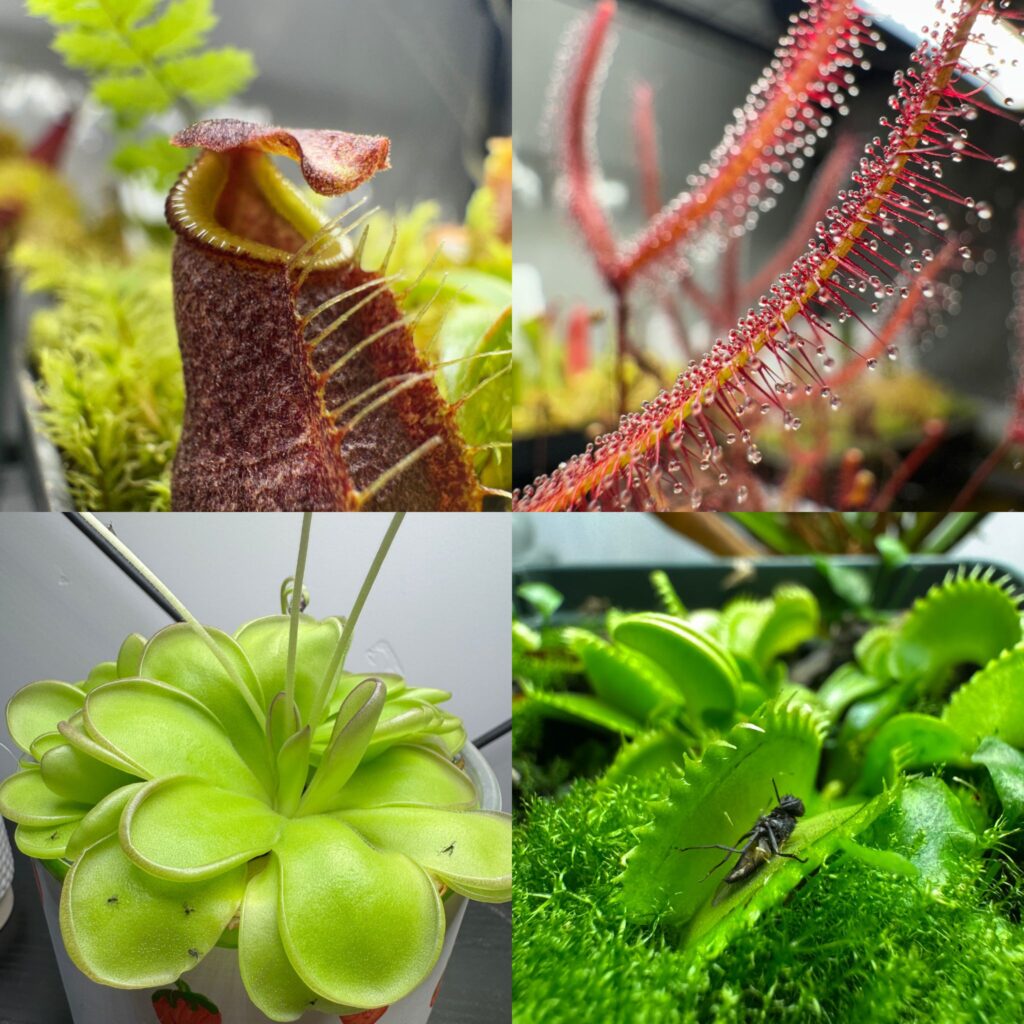
- Venus flytraps snap shut on insects
- Pitcher plants digest prey in fluid-filled traps
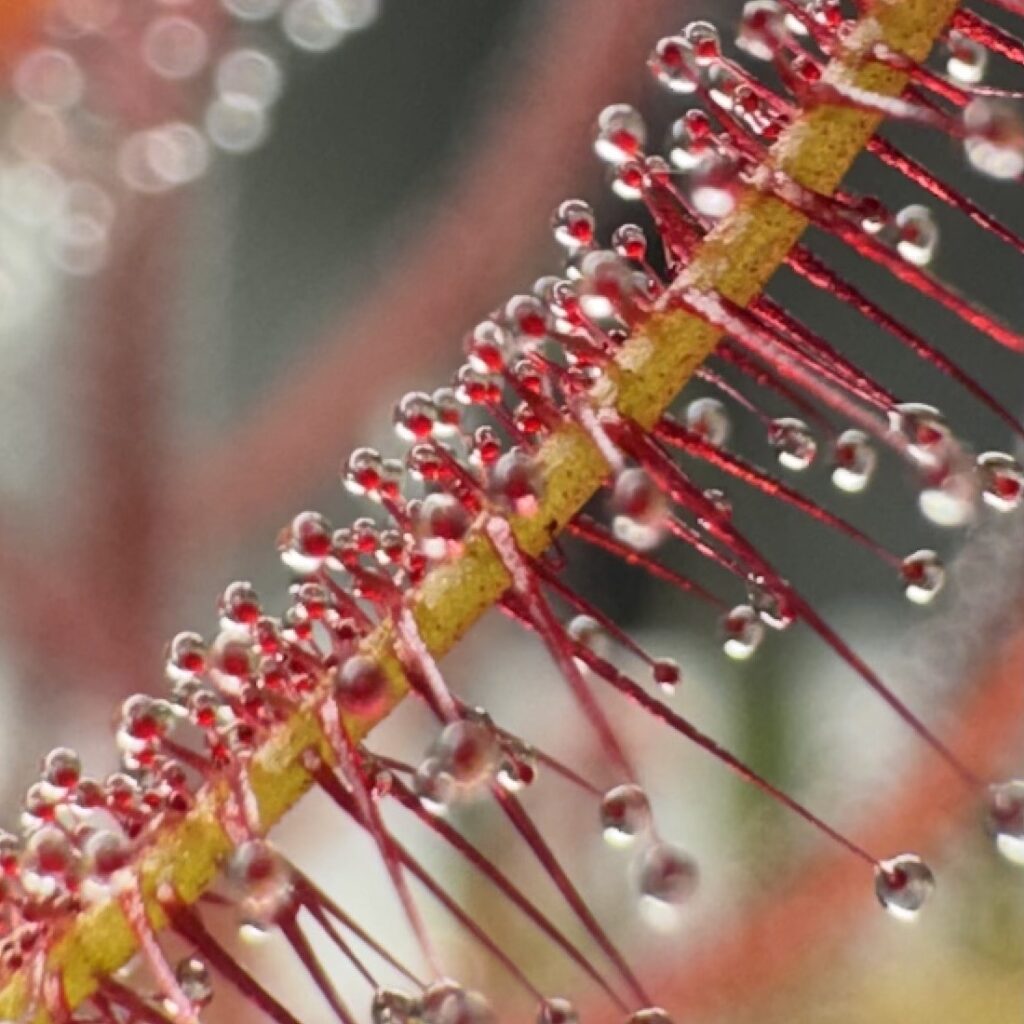
- Sundews (Drosera) use sticky dew to trap small bugs
This adaptation allows them to thrive in mineral-poor soils while still getting essential nutrients for growth.
Watering Tips for Healthy Growth
- Always use distilled water, RO water, or rainwater
- Keep soil consistently moist for bog-adapted species
- Avoid tap water or fertilized water entirely
- Use the tray method for bog plants to maintain proper moisture
Proper water ensures healthy roots, active traps or pitchers, and long-term survival.
No. Tap water contains minerals that can burn the roots and damage or kill the plant.
Distilled water, reverse osmosis (RO) water, and rainwater are all safe for carnivorous plants.
Their roots are adapted to absorb only water. Nutrients in soil or water can harm them, which is why they capture insects to get what they need.
Yes, collected rainwater is naturally low in minerals and excellent for all carnivorous plants.
No. Carnivorous plants get their nutrients from insects, not from soil or water.
Pingback: Can Carnivorous Plants Live Inside Year Round? - Carnivorous Supply
Pingback: How to Care for Pinguicula (Butterwort) - Carnivorous Supply
Pingback: What is the Best Soil for Carnivorous Plants - Carnivorous Supply
Pingback: Why Did My Carnivorous Plant Die? - Carnivorous Supply