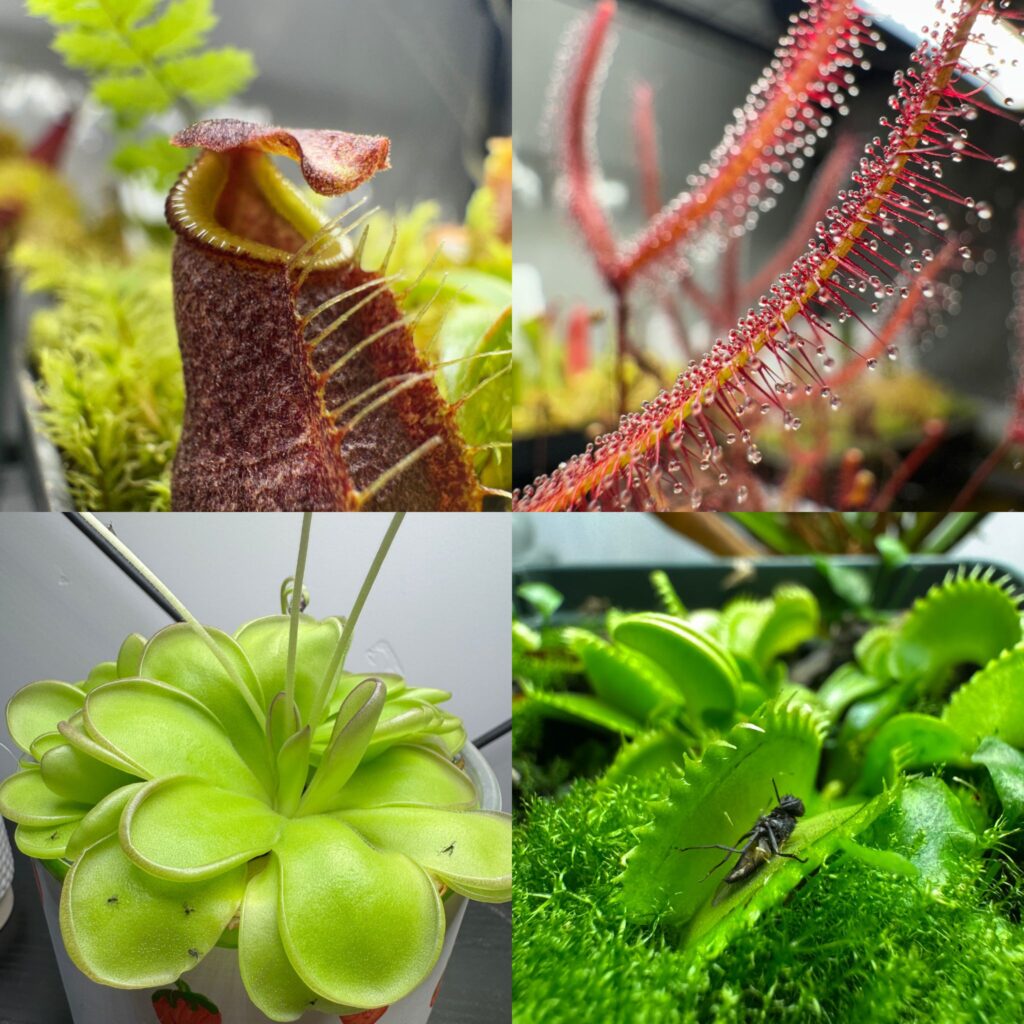
Venus fly trap care comes down to a few non-negotiables: pure distilled water, nutrient-poor soil, strong light, and a required winter dormancy period. If you’re asking, how do I care for Venus fly traps so they don’t die, the answer is to recreate their natural bog conditions as closely as possible. When you do that, they’re actually tough and long-lived plants.
Watering Venus Fly Traps Correctly
Water quality is one of the biggest reasons Venus fly traps fail.
Always use pure water, which means:
- Distilled water (the most commonly purchased and easiest to find)
- Reverse osmosis (RO) water
- Rainwater
Tap water contains dissolved minerals that build up in the soil. Over time, those minerals burn the roots and slowly damage or kill the plant.
Venus fly traps like consistently moist conditions. I personally prefer to keep my sphagnum moss constantly moist, never dry. The tray method works very well:
- Place the pot in a shallow tray
- Keep about 1 inch of distilled water in the tray
- Allow the soil to wick moisture from below
During dormancy, you can reduce the water level slightly, but the medium should never completely dry out.
My Preferred Soil for Venus Fly Trap Care
Venus fly traps must grow in nutrient-poor soil. Regular potting soil will kill them.
My preferred medium is:
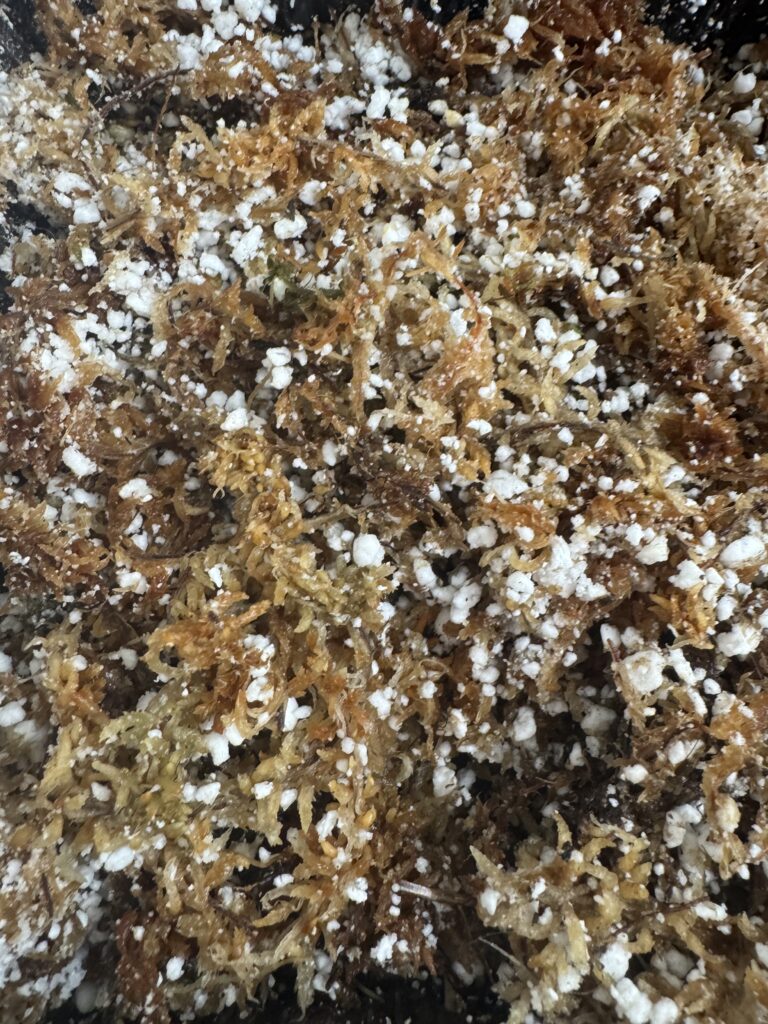
- 50/50 sphagnum moss and perlite
This mix works well because:
- The sphagnum retains moisture
- The perlite improves drainage and airflow
- It stays light and prevents compaction
I always keep the sphagnum moist, since Venus fly traps naturally grow in bog environments. Avoid any soil that contains added fertilizer or nutrients.
Light Requirements
Strong light is essential for proper Venus fly trap care.
- Outdoors: At least 6 hours of direct sunlight daily
- Indoors: Strong grow lights for 12–16 hours per day
Without enough light:
- Traps stay small
- Growth becomes weak
- The inside of the traps may lose their red coloration
Too little light is one of the most common reasons Venus fly traps struggle indoors.
Venus Fly Trap Dormancy Is Required
One of the most important things to understand is that Venus fly traps require a winter dormancy period.
They are temperate plants native to the Carolinas, and their natural cycle includes a cold rest period.
During dormancy:
- Growth slows down significantly
- Traps may turn black and die back
- The plant may look like it’s dying
This is completely normal.
As long as the rhizome (the white underground base) remains firm and healthy, the plant will return in spring.
Dormancy conditions usually include:
- Temperatures between 35–50°F
- Shorter daylight hours
- Slightly reduced watering
Skipping dormancy year after year can weaken and eventually kill the plant.
Division and Propagation
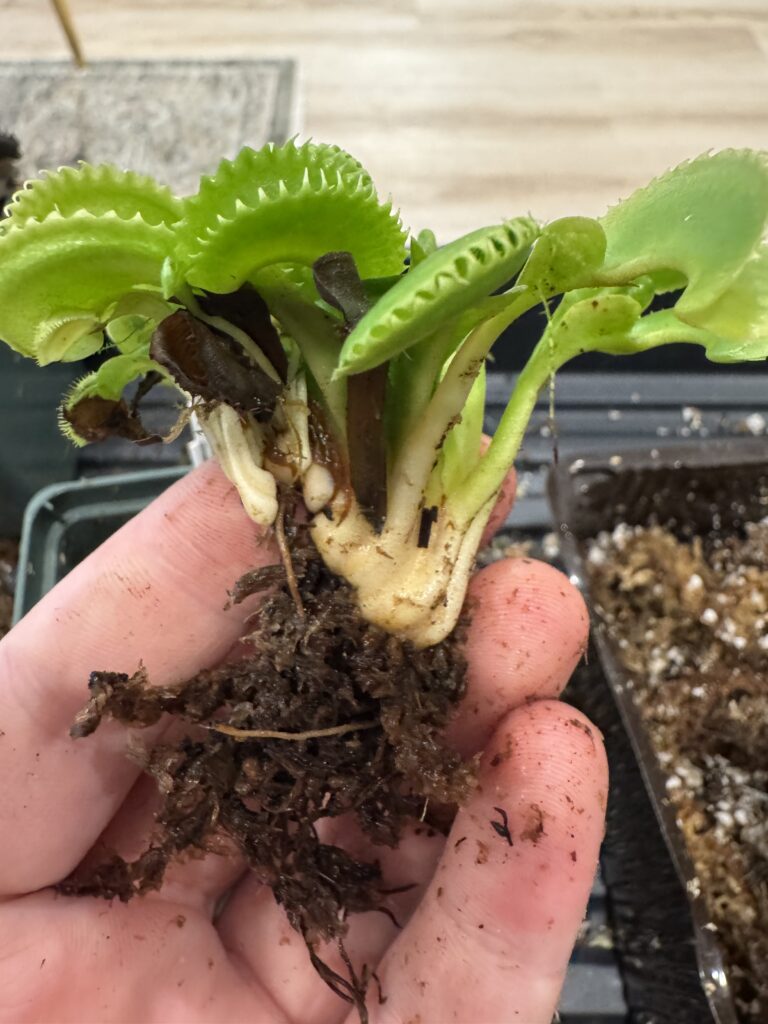
Healthy Venus fly traps naturally divide over time.
As they mature, the rhizome produces new growth points. Eventually, you’ll notice multiple clusters of traps forming in the same pot. This is called division.
You can:
- Gently separate divisions during repotting
- Ensure each division has roots attached
- Replant them in fresh 50/50 sphagnum moss and perlite
Division is a normal and healthy part of Venus fly trap growth. It’s also a sign your plant is thriving.
Feeding and Fertilizing Venus Fly Traps
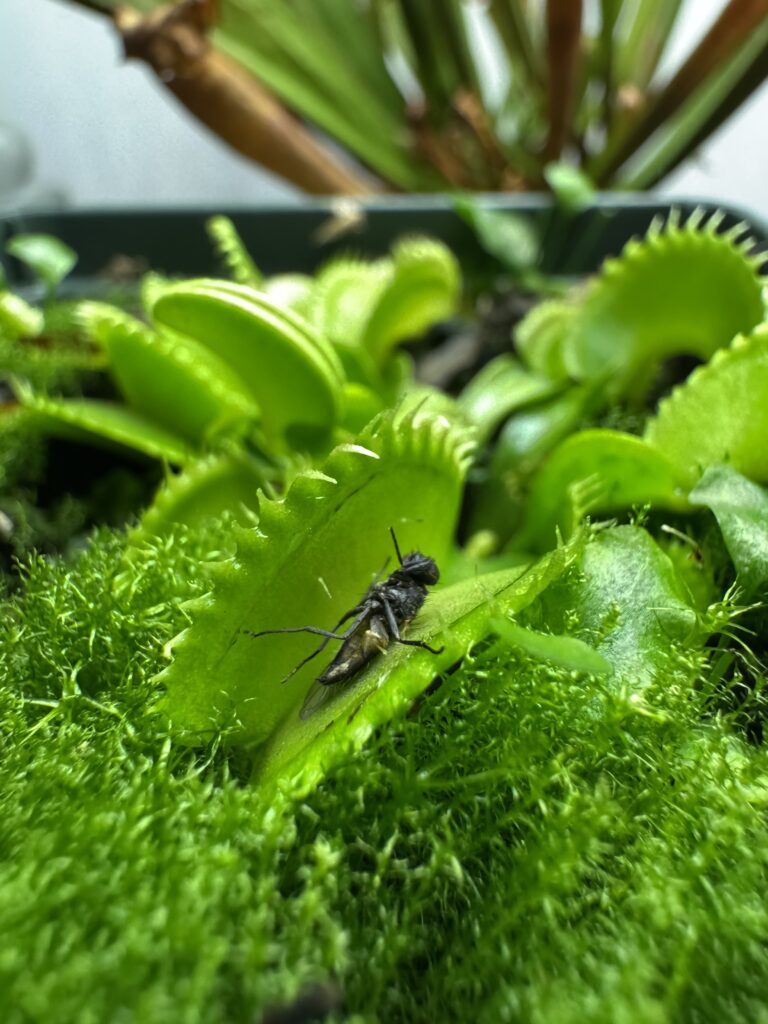
Venus fly traps get nutrients from insects, not soil.
- Outdoors, they usually feed themselves
- Indoors, occasional small insects are fine
Avoid triggering traps repeatedly without feeding, as it wastes energy.
You can also use fertilizers specifically made for carnivorous plants if used properly and according to instructions. Never use regular houseplant fertilizer in the soil.
Common Venus Fly Trap Care Mistakes
- Using tap water instead of distilled water
- Planting in nutrient-rich soil
- Not providing enough sunlight
- Skipping winter dormancy
- Letting the medium dry out completely
- Overfeeding or constantly triggering traps
Most Venus fly trap problems trace back to one of these.
FAQ
Use strong grow lights, distilled water, a 50/50 sphagnum moss and perlite mix, and provide winter dormancy.
Yes. Dormancy is required for long-term health and survival.
Keep the sphagnum moist at all times using distilled water. The tray method works best
During repotting, usually in late winter or early spring before active growth begins.
Only with fertilizers specifically made for carnivorous plants, and never regular houseplant fertilizer.