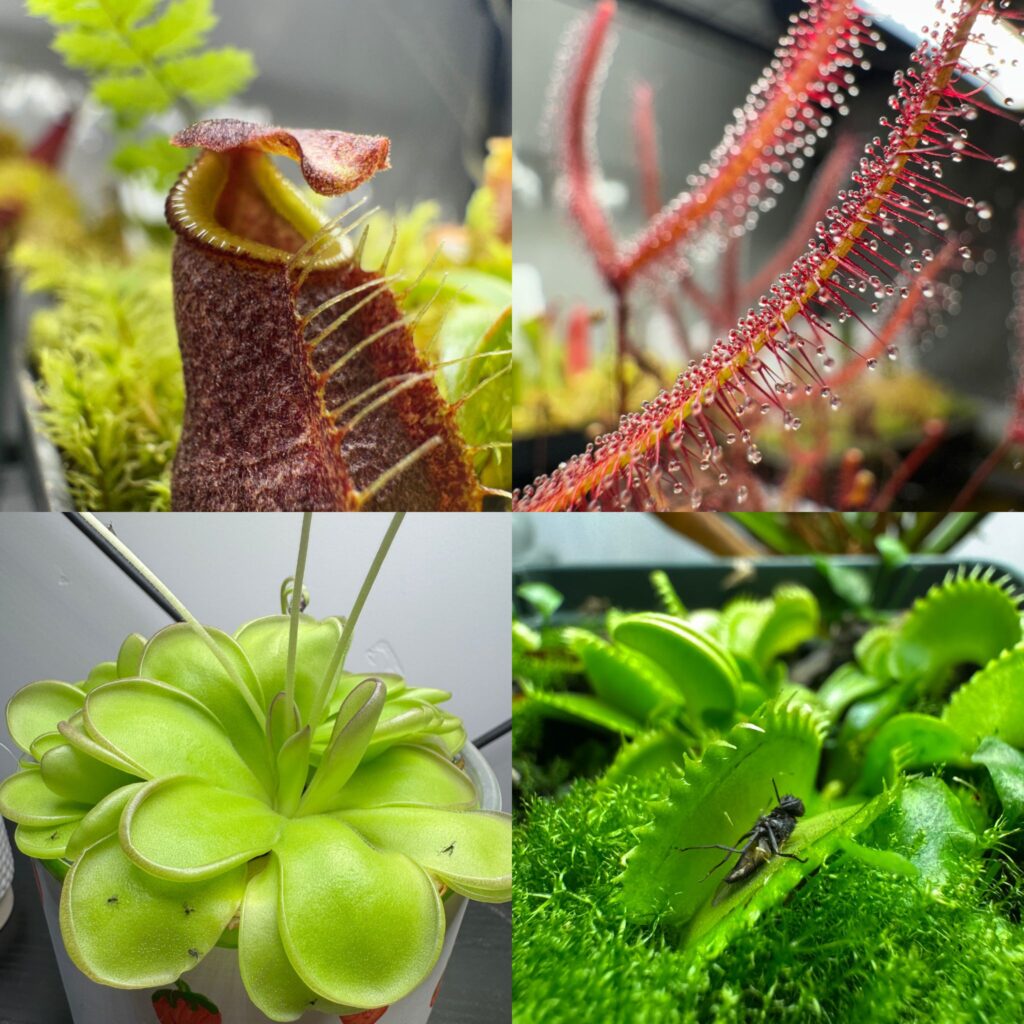
The best soil mix for carnivorous plants is always nutrient-poor, well-draining, and free of fertilizers. I personally use simple 1:1 mixes like peat and perlite or sphagnum moss and perlite, and in some cases 100% sphagnum moss. The key is avoiding regular potting soil and keeping minerals out of the root zone.
Carnivorous plants evolved in bogs and low-nutrient environments. Their roots are not designed to handle fertilizer or mineral-rich soil. If you use standard potting mix, it will almost always damage or kill the plant.
Let’s break down what works and what I use for each type.
What Makes a Good Carnivorous Plant Soil Mix?
A proper carnivorous plant soil mix should be:
- Nutrient poor
- Free of added fertilizers
- Light and airy
- Able to retain moisture without becoming compacted
Never use:
- Regular potting soil
- Miracle-Gro products
- Compost
- Soil with slow-release fertilizer
Minerals in soil can burn roots the same way mineral-heavy water can.
Always pair the correct soil mix with distilled water (the most accessible option), reverse osmosis (RO) water, or rainwater. Even the perfect soil won’t help if mineral-rich tap water is used.
My Most Common Soil Mixes
These are the main mixes I personally use and have had consistent success with:
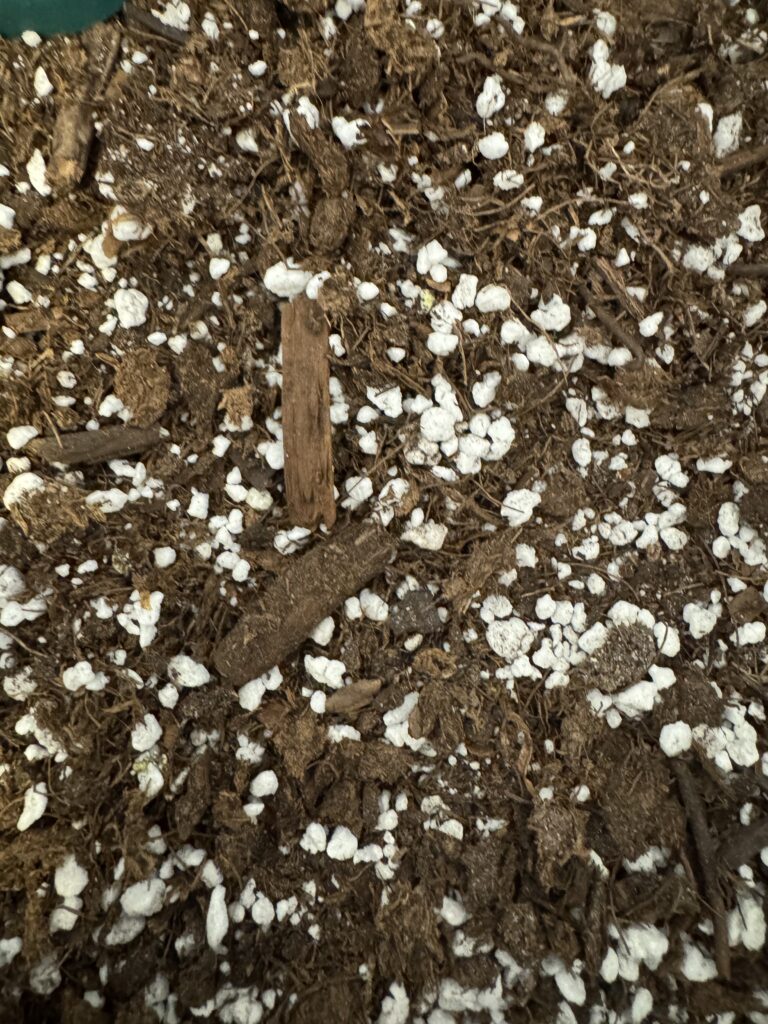
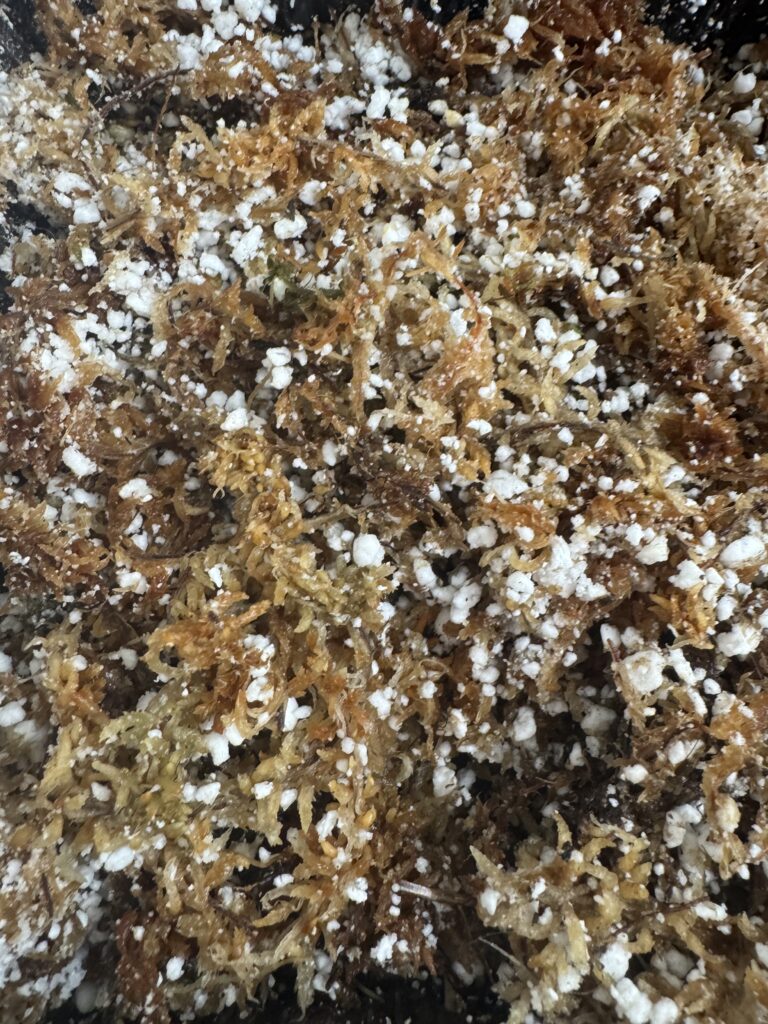
- 1:1 peat moss and perlite (pictured above)
- 1:1 sphagnum moss and perlite (pictured above)
- 100% long-fiber sphagnum moss
Each has its benefits depending on the species.
Peat and perlite holds moisture well and mimics bog conditions.
Sphagnum and perlite is airy but still retains moisture.
Pure sphagnum moss is simple and works great for certain plants.
Best Soil Mix by Plant Type
Drosera (Sundews)
For most Drosera, I use:
- 1:1 peat and perlite
or - 1:1 sphagnum moss and perlite
They thrive in consistently moist, nutrient-poor media.
Utricularia (Bladderworts)
For terrestrial Utricularia:
- 1:1 peat and perlite works very well
They appreciate constant moisture and low nutrients. Many growers also use long-fiber sphagnum successfully.
Cephalotus
Cephalotus can be sensitive, so I use:
- A perlite-based mix like 1:1 peat and perlite
Drainage is important here. They don’t like being suffocated or sitting in stagnant conditions.
Pinguicula (Butterworts)
For most Pinguicula, I prefer:
- 1:1 peat and perlite
I like this mix because it can dry slightly between waterings instead of staying overly saturated. That slight drying helps prevent rot while still keeping things appropriately moist.
Nepenthes (Tropical Pitcher Plants)
For Nepenthes, I use:
- 1:1 sphagnum moss and perlite
or - 100% long-fiber sphagnum moss
They prefer an airy, well-draining medium. Unlike bog plants, they do not like sitting in water constantly. The mix should stay moist but not waterlogged.
Venus Flytraps
For Venus flytraps, I use:
- 1:1 sphagnum moss and perlite
or - 100% sphagnum moss
They enjoy consistent moisture and excellent drainage. I keep the sphagnum evenly moist at all times using distilled water.
Why Carnivorous Plants Can’t Use Regular Soil
Carnivorous plants get their nutrients from insects captured in their traps, pitchers, or sticky leaves. Because of this, their roots are adapted for low-nutrient environments.
When exposed to fertilizer or mineral-heavy soil:
- Roots can burn
- Growth can stall
- Leaves may blacken
- The plant can decline quickly
That’s why the best soil mix for carnivorous plants is always simple and clean.
Should You Fertilize Carnivorous Plant Soil?
Never mix fertilizer into the soil.
If you choose to supplement feeding, use fertilizers specifically made for carnivorous plants, and apply them carefully according to product instructions. Regular fertilizer in the substrate is one of the fastest ways to damage a plant.
Final Thoughts on the Best Soil Mix for Carnivorous Plants
There isn’t one single universal mix, but sticking to:
- 1:1 peat and perlite
- 1:1 sphagnum moss and perlite
- 100% sphagnum moss
will cover most common species.
Pair the correct soil with distilled water, proper lighting, and species-specific care, and you’ll avoid the majority of beginner mistakes.
FAQ
A nutrient-poor mix like 1:1 peat and perlite or 1:1 sphagnum moss and perlite works for most species.
No. Regular potting soil contains nutrients and fertilizers that can burn the roots.
Perlite improves drainage and aeration. Many growers include it in a 1:1 mix.
Yes. Many species like Venus flytraps and Nepenthes grow well in pure long-fiber sphagnum moss.
Yes. Peat-heavy mixes hold more water, while sphagnum-based mixes are more airy. Always use distilled water, reverse osmosis water, or rainwater.