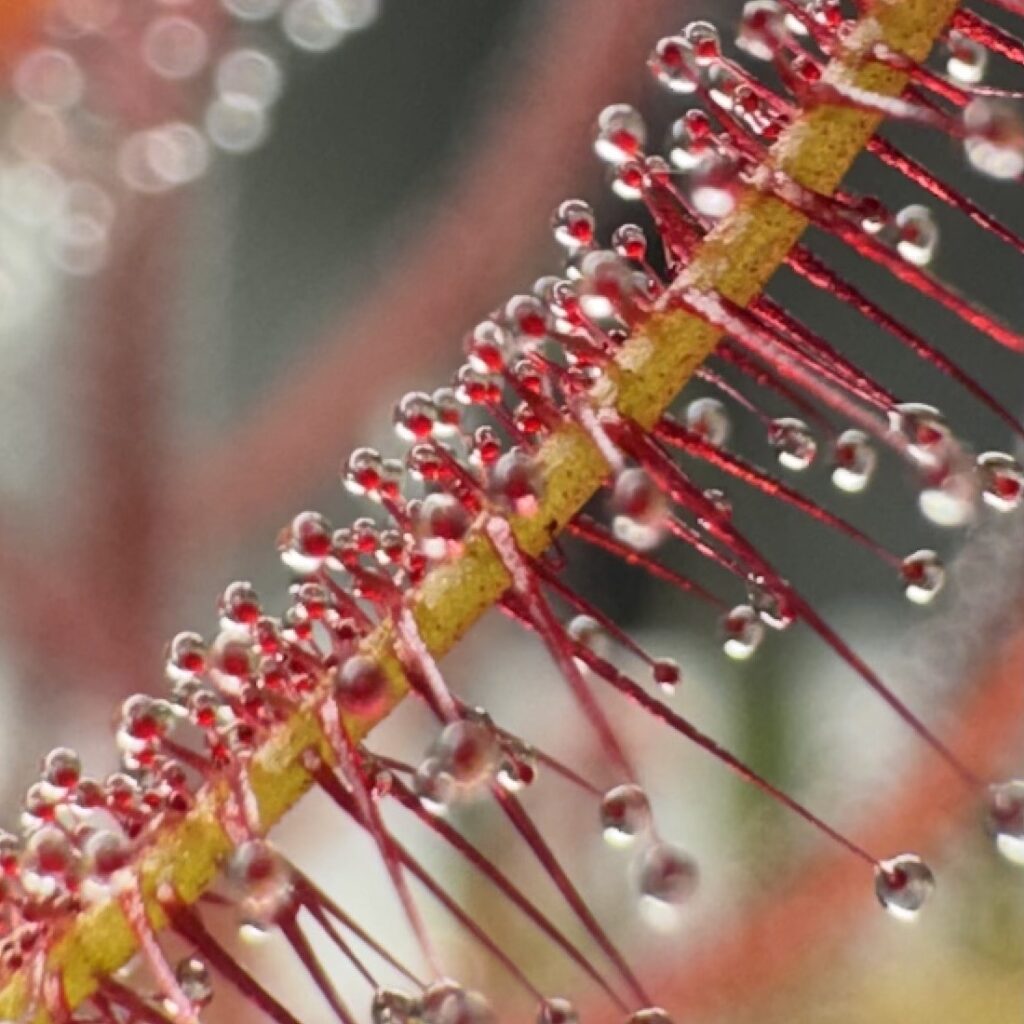
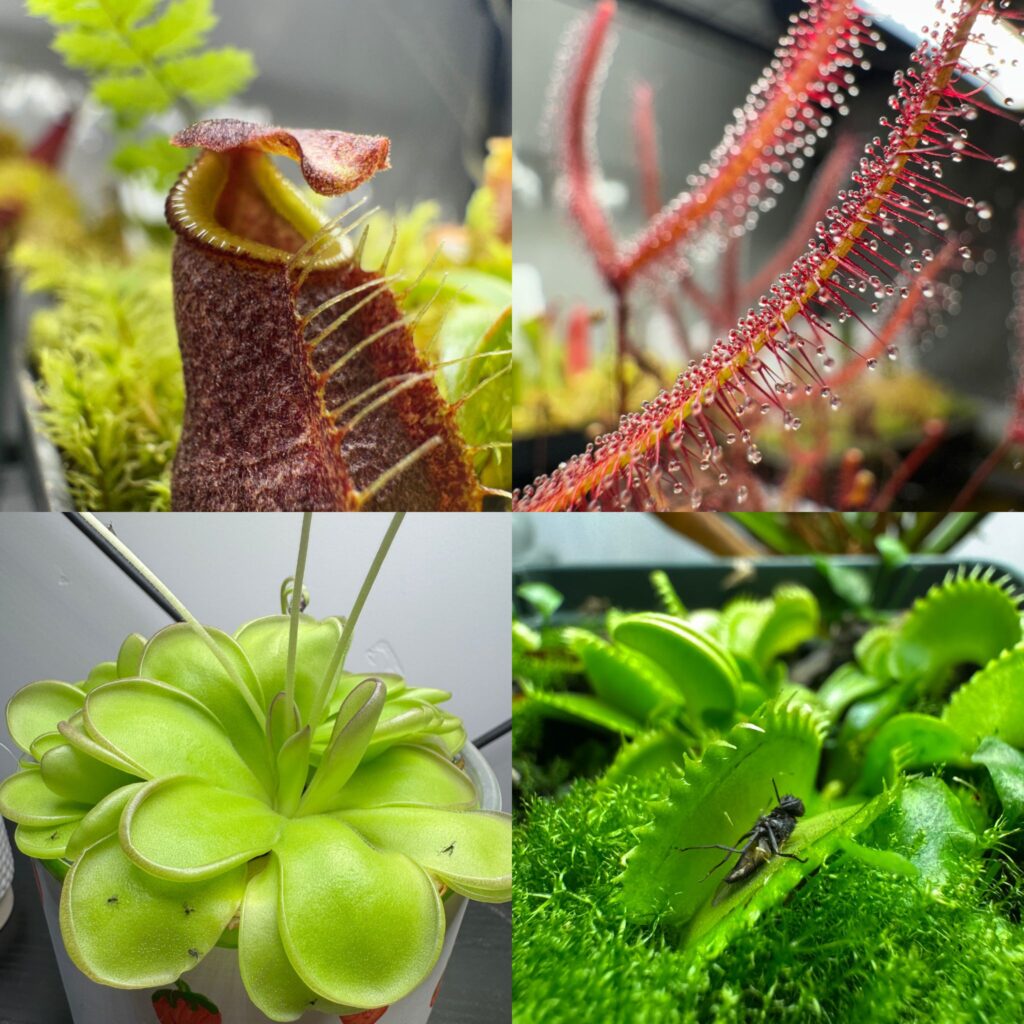
Carnivorous plants need bright light to thrive, but the exact amount depends on the species. Most beginner-friendly plants, like sundews and Venus flytraps, do best in full sun or strong indirect light indoors. Providing the right balance of light ensures healthy growth, vibrant colors, and active traps or pitchers.
Understanding Carnivorous Plant Light Needs
Carnivorous plants evolved in open bogs and wetlands with plenty of natural light. Light is essential for photosynthesis, producing sticky dew or colorful pitchers, and overall plant health. Without enough light, carnivorous plants grow weak, pale, and may stop producing traps or pitchers entirely.
Light requirements vary by species:
- Tropical pitcher plants (Nepenthes) tolerate some filtered light
- Temperate Venus flytraps and sundews thrive in direct sun
- Indoor plants often need supplemental lighting to meet their needs
Beginner-Friendly Carnivorous Plants and Their Sunlight Requirements
Here are some common beginner species and their ideal light conditions:
- Drosera (Sundews): Full sun outdoors, bright indirect indoors
- Venus Flytraps: Full sun outdoors; 12–16 hours under strong indoor light
- Pinguicula (Butterworts): Bright indirect light, tolerates some direct sun
- Nepenthes Hybrids: Bright filtered light, avoid harsh direct sun
Providing the right light for your species ensures healthy leaves, active traps, and steady growth.
How Much Light Indoors vs Outdoors
- Outdoors: Most carnivorous plants do best in full sun for 4–6 hours per day, with some species tolerating all-day sunlight.
- Indoors: Place near a south-facing window or under strong LED grow lights for 12–16 hours per day.
Too little light slows growth, while too much intense sun can scorch delicate leaves, especially indoors.
Using Grow Lights Effectively
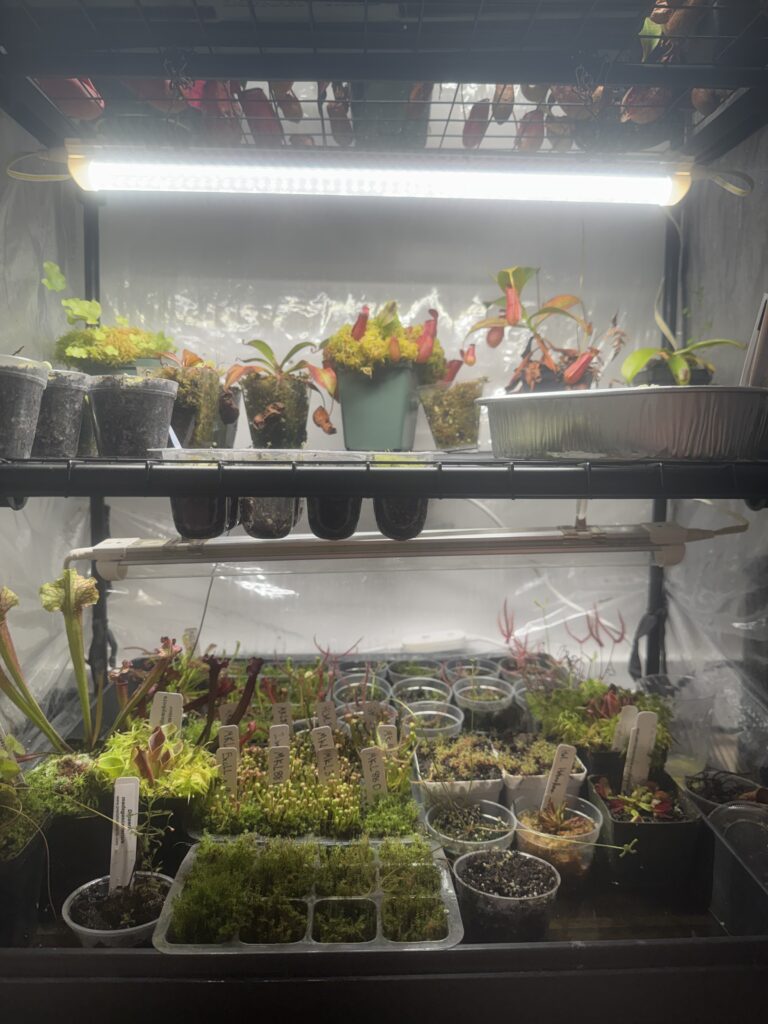
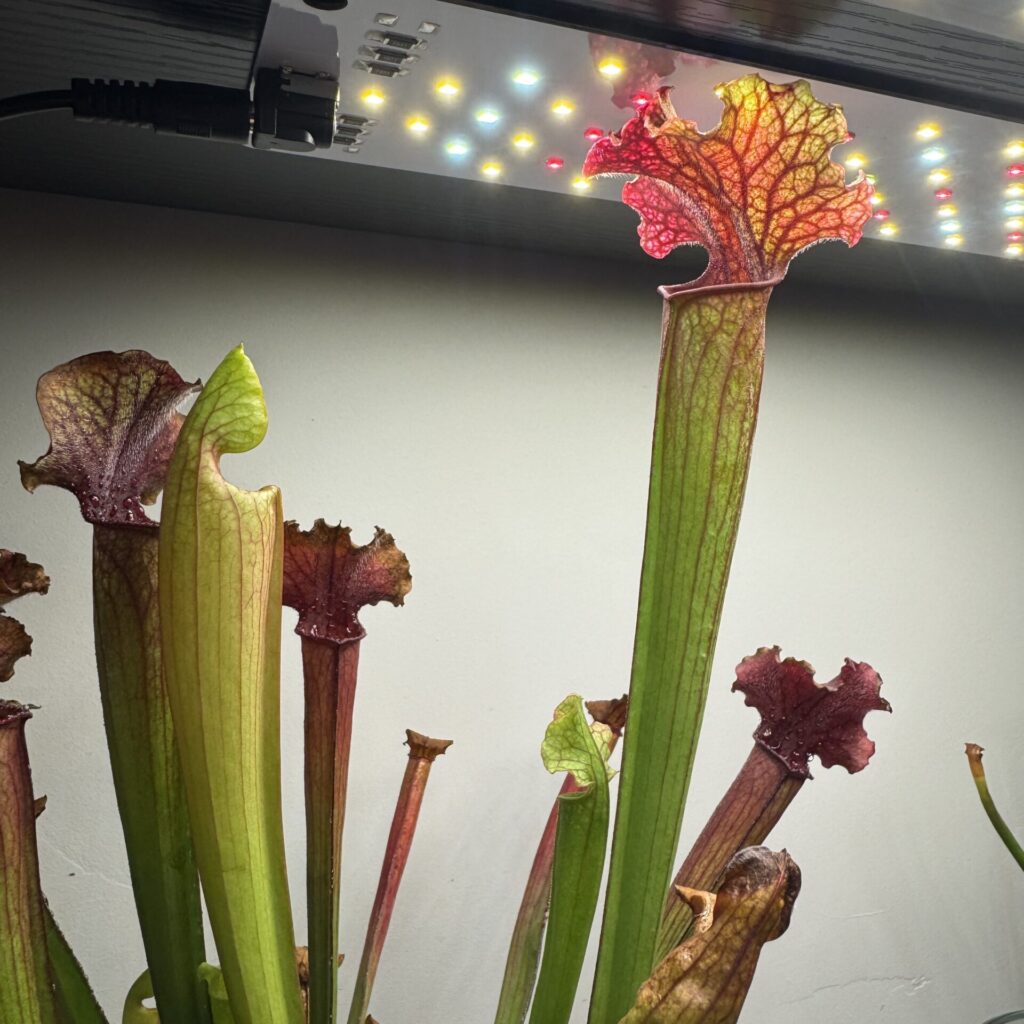
Grow lights are essential for indoor carnivorous plants:
- LED grow lights provide full-spectrum light similar to natural sunlight
- Position lights 6–12 inches above the plant, adjusting as needed
- Use a timer to maintain consistent light cycles
Grow lights are particularly helpful for tropical species and winter months when sunlight is limited.
Signs Your Plant Is Getting Too Little or Too Much Light
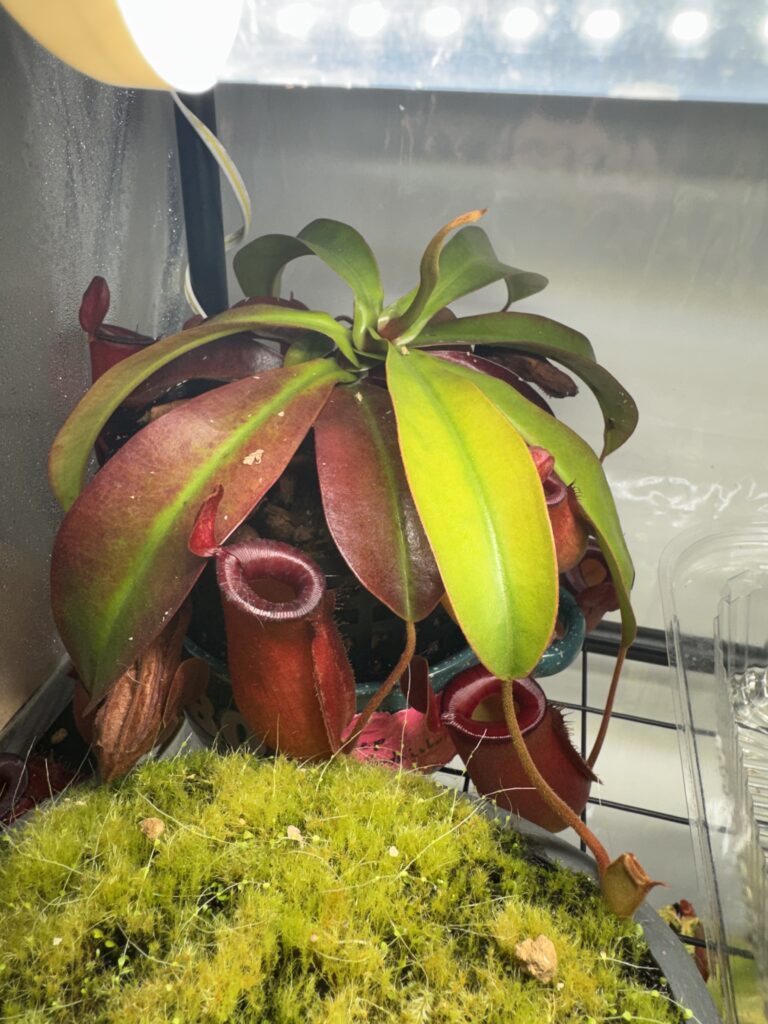
Watch your plant carefully:
- Too little light: Pale, weak leaves, reduced trap or pitcher activity
- Too much light: Leaf burn, browning, or dried-out edges
- Adjust location, light duration, or intensity to correct these issues
Combining Light With Other Care Basics
Light works hand-in-hand with other essential care:
- Water: Use distilled water, reverse osmosis water, or rainwater to keep the soil consistently moist
- Soil: Nutrient-poor mixes like peat moss and perlite or long-fiber sphagnum moss
- Humidity: Many tropical species need 50–70% humidity; temperate plants are more adaptable
Meeting all these needs ensures your carnivorous plant thrives in either sun or shade conditions.
Common Mistakes With Sunlight and Shade
- Using too little light, especially indoors
- Exposing sensitive tropical species to harsh midday sun
- Ignoring the need for seasonal light adjustments
- Forgetting that indirect light can sometimes substitute if direct sun isn’t available
Correcting light exposure often dramatically improves plant health.
FAQ
Most temperate species like Venus flytraps and sundews thrive in full sun, while some tropical species prefer bright, filtered light.
They can tolerate partial shade but may grow weaker and produce fewer traps or pitchers.
12–16 hours under strong LED grow lights or bright indirect sunlight works well for most beginner species.
Yes, intense midday sun can scorch leaves, especially indoors or in tropical species.
Use distilled water, nutrient-poor soil, and a full-spectrum LED grow light on a timer for 12–16 hours per day.