Watering carnivorous plants is not one-size-fits-all—it depends heavily on the species. Most carnivorous plants are bog-adapted and prefer consistently moist soil, often achieved using the tray method, while tropical and more sensitive species require slightly different approaches. Using pure water like distilled water (or reverse osmosis or rainwater) is critical to prevent mineral buildup, which can harm the plants.
Why Watering Matters for Carnivorous Plants
Carnivorous plants are naturally adapted to nutrient-poor, wet soils like bogs and marshes. Proper watering:
- Keeps roots healthy
- Supports trap and pitcher production
- Prevents stress, rot, or death
Unlike most houseplants, many carnivorous plants cannot tolerate standard tap water. Always use distilled water, reverse osmosis water, or rainwater.
Understanding Species-Specific Water Needs
Different carnivorous plant genera have distinct watering requirements:
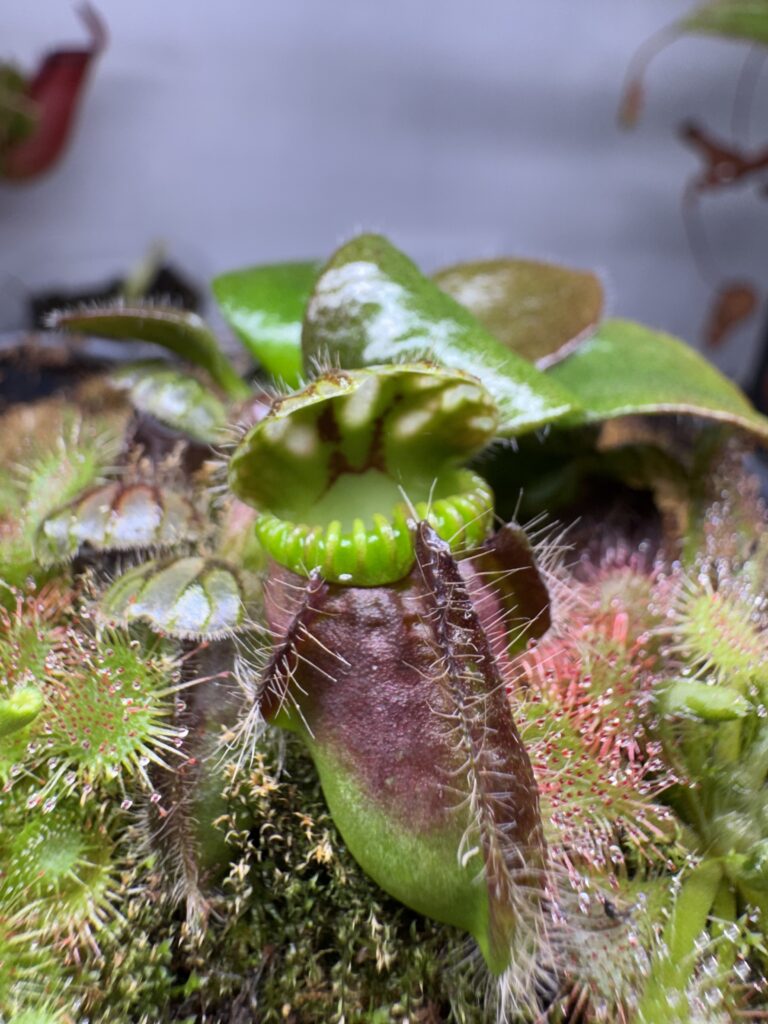
Pictued above is a image of Cephalotus, the Australian pitcher plant.
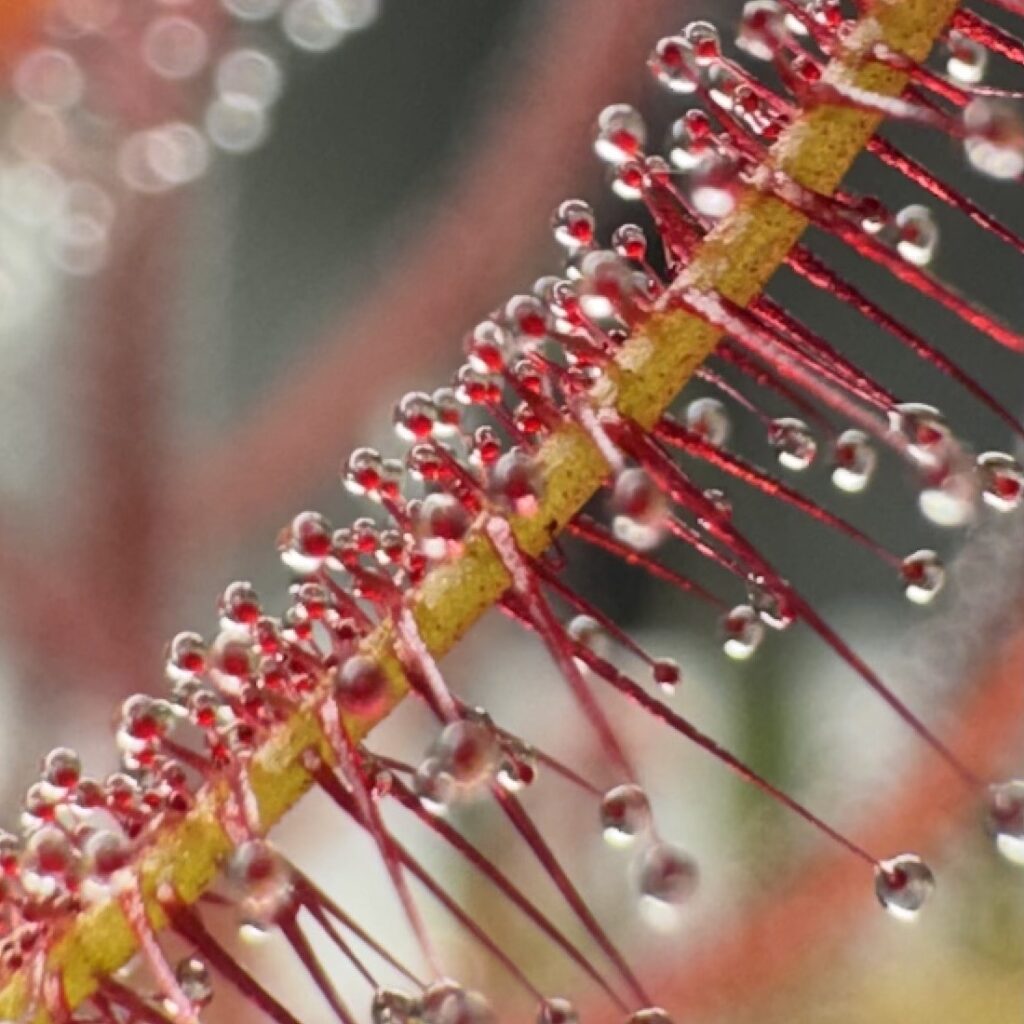
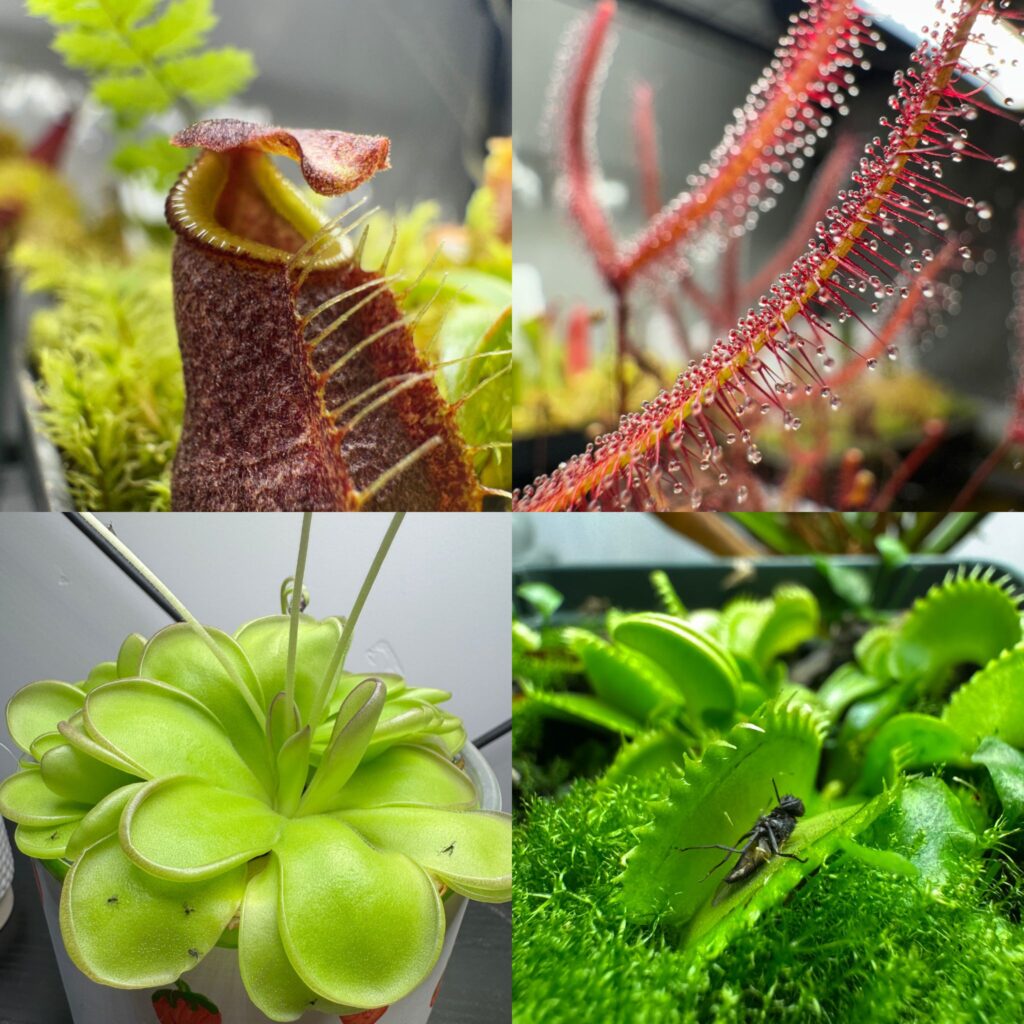
- Drosera (Sundews): Enjoy constantly moist soil, often via tray watering. Soil should never dry out.
- Sarracenia (North American Pitcher Plants): Like Drosera, they thrive in moist conditions and are excellent candidates for the tray method.
- Nepenthes (Tropical Pitcher Plants): Prefer soil that drains well but stays evenly moist. Overwatering or sitting in water can harm roots.
- Cephalotus (Australian Pitcher Plant): Sensitive to watering errors; inconsistent moisture or irregular disturbances can kill them unexpectedly.
The Tray Method for Bog Plants
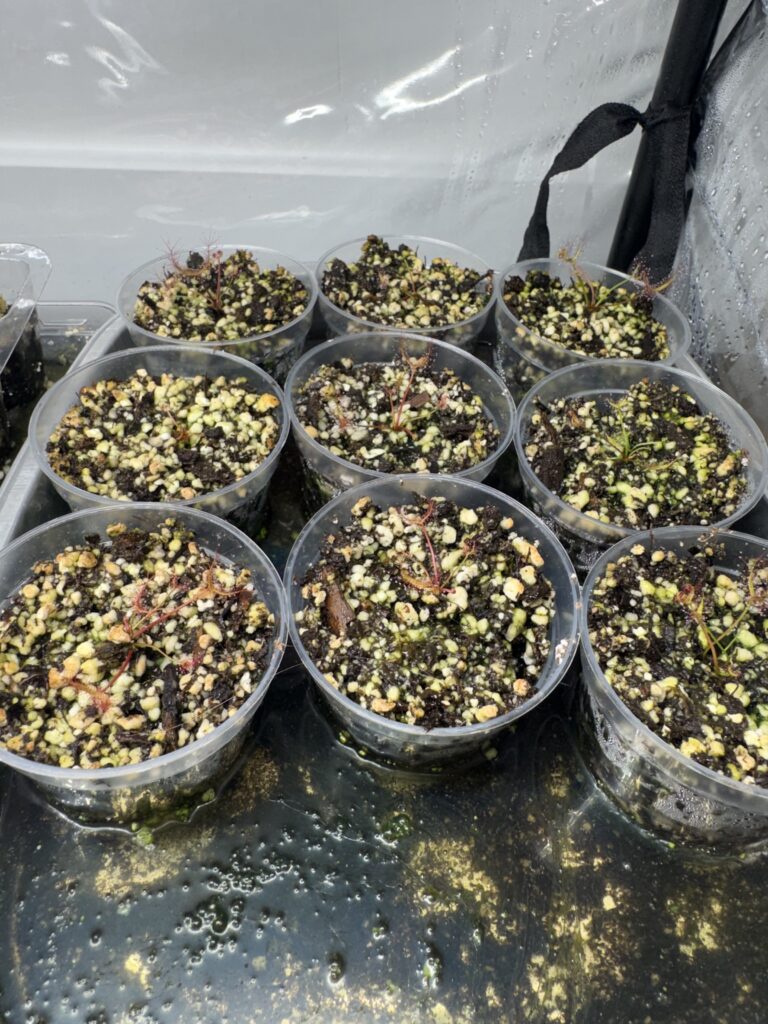
Many temperate and bog-adapted species like Drosera and Sarracenia thrive using the tray method:
- Place the pot in a shallow tray with 1–2 inches of water
- Keep the tray filled to maintain constant soil moisture
- Avoid overfilling, which can drown roots
This method mimics their natural habitat and ensures consistent moisture without oversaturating the soil.
Watering Tropical Species Like Nepenthes
Nepenthes need a different approach:
- Use a well-draining mix, such as peat-based soil with perlite or orchid bark
- Water regularly to keep soil lightly moist but never soggy
- Mist occasionally to maintain humidity, but avoid waterlogging
- Avoid letting water collect in pitchers too long, as stagnant water can cause rot
Nepenthes prefer evenly moist conditions, not constant standing water.
Watering Sensitive Species Like Cephalotus
Cephalotus are notoriously sensitive:
- Require consistently moist but not wet soil
- Irregular watering or sudden changes in moisture can quickly kill them
- Tray method can be used with careful monitoring
- Adjust water levels gradually and avoid disturbance of roots or crowns
These plants require attention to detail and careful observation of soil moisture.
Soil Considerations and Drainage
- Use nutrient-poor soil: peat moss with perlite or long-fiber sphagnum moss for bog species
- Nepenthes and other tropical species need well-draining mixes
- Proper soil ensures water is retained without suffocating roots
Learn more about carnivorous plant soils requirements here!
Common Watering Mistakes
- Using tap water instead of distilled or pure water (Learn more here!)
- Letting soil completely dry for bog species
- Overwatering species like Nepenthes and Pinguiculas
- Ignoring Cephalotus’ sensitivity to irregular moisture
- Not adjusting water levels seasonally
FAQ
Keep the soil consistently moist using the tray method, usually with 1–2 inches of distilled water in a shallow tray.
No. They need evenly moist, well-draining soil but should not sit in standing water. Mist occasionally for humidity.
They are sensitive to irregular watering or disturbances. Soil moisture must be carefully monitored and consistent.
Always use distilled water, reverse osmosis water, or rainwater. Tap water can damage roots over time.
Yes. Temperate species like Sarracenia and Venus flytraps require less water during winter dormancy but the soil should remain slightly moist.