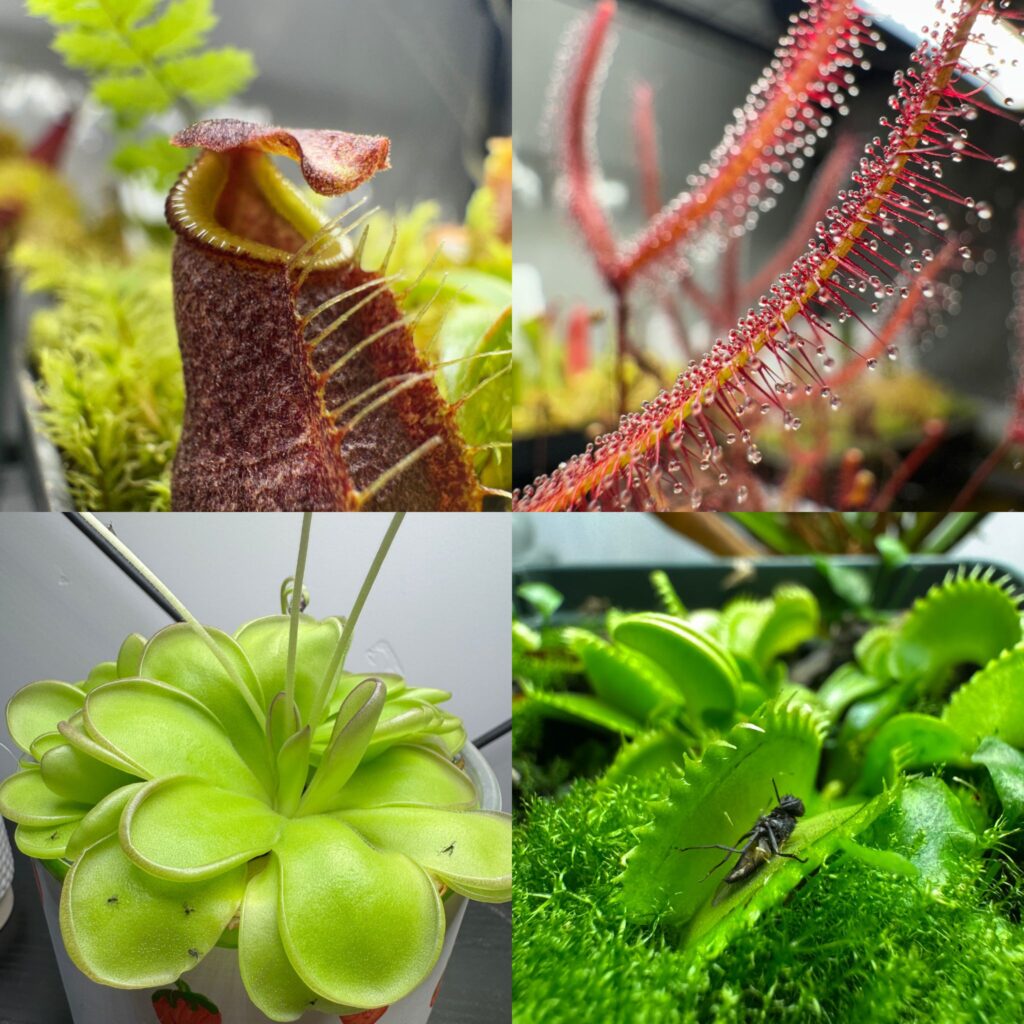
If you’re asking how do I care for Utricularia also known as bladderwort, the answer depends slightly on the type you’re growing, but the basics are simple: distilled water, nutrient-poor soil, consistent moisture, and proper lighting. Utricularia are unique carnivorous plants that use tiny underground bladder traps to capture microscopic prey, and they can be surprisingly easy to grow once you understand their needs.
Understanding Utricularia
Utricularia, commonly called bladderworts, are carnivorous plants that trap tiny organisms using small vacuum-like bladders. Many species are terrestrial (grown in soil), some are epiphytic, and others are aquatic.
Most growers encounter terrestrial or epiphytic varieties, which are often grown similarly to other carnivorous plants but with a few differences.
Watering Utricularia Properly
Like all carnivorous plants, Utricularia are highly sensitive to minerals.
Always use:
- Distilled water (the most commonly purchased and safest option)
- Reverse osmosis (RO) water
- Rainwater
Tap water can cause mineral buildup in the substrate, which may damage roots and slow growth.
Most terrestrial bladderworts prefer consistently moist soil. Many growers use a shallow tray with distilled water to keep the medium damp. Unlike Nepenthes, most terrestrial Utricularia tolerate consistently wet conditions well.
Aquatic species should be kept fully submerged in pure water, never tap water.
Soil and Growing Medium
Utricularia require nutrient-poor substrates.
Common mixes include:
- Peat moss and perlite
- Long-fiber sphagnum moss
- For epiphytic types, airy sphagnum-based mixes
The exact mix can vary by species, but the key is avoiding fertilized or mineral-rich soils. Their root systems are delicate and adapted for low-nutrient environments.
Light Requirements
Lighting plays a major role in how well Utricularia grow and flower.
- Bright indirect light works well for many species
- Some tolerate partial sun
- Too little light can result in weak growth and no flowers
With strong lighting, many terrestrial bladderworts will form dense mats and produce surprisingly vibrant flowers.
Temperature and Humidity
Care varies slightly by species:
- Tropical species prefer warm, stable temperatures
- Temperate species may require cooler conditions or seasonal changes
- Epiphytic species often appreciate moderate humidity
Researching your specific species is important, as Utricularia are a large and diverse genus.
Feeding and Fertilizing Utricularia
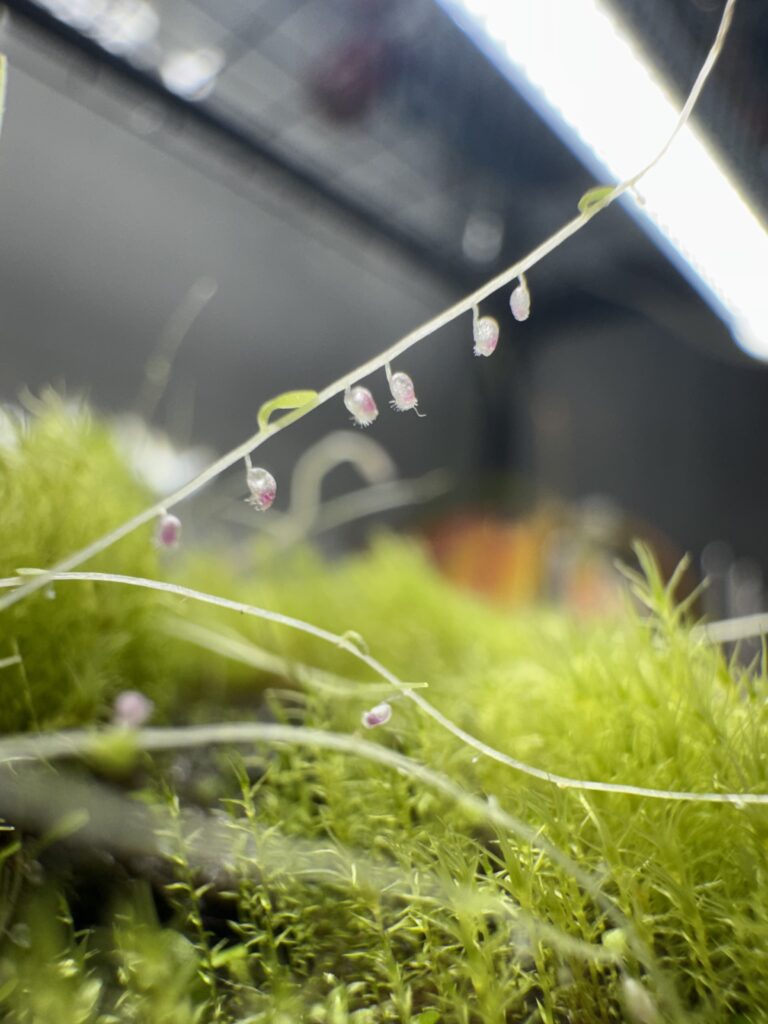
Utricularia naturally feed on microscopic organisms captured in their bladder traps. In most cases, you do not need to manually feed them.
If desired, you may use fertilizers specifically made for carnivorous plants, applied carefully and according to product instructions. Never use regular plant fertilizer in the soil, as this can damage the plant.
Aquatic species often obtain enough nutrients from their water environment if properly maintained with pure water.
Flowering in Utricularia
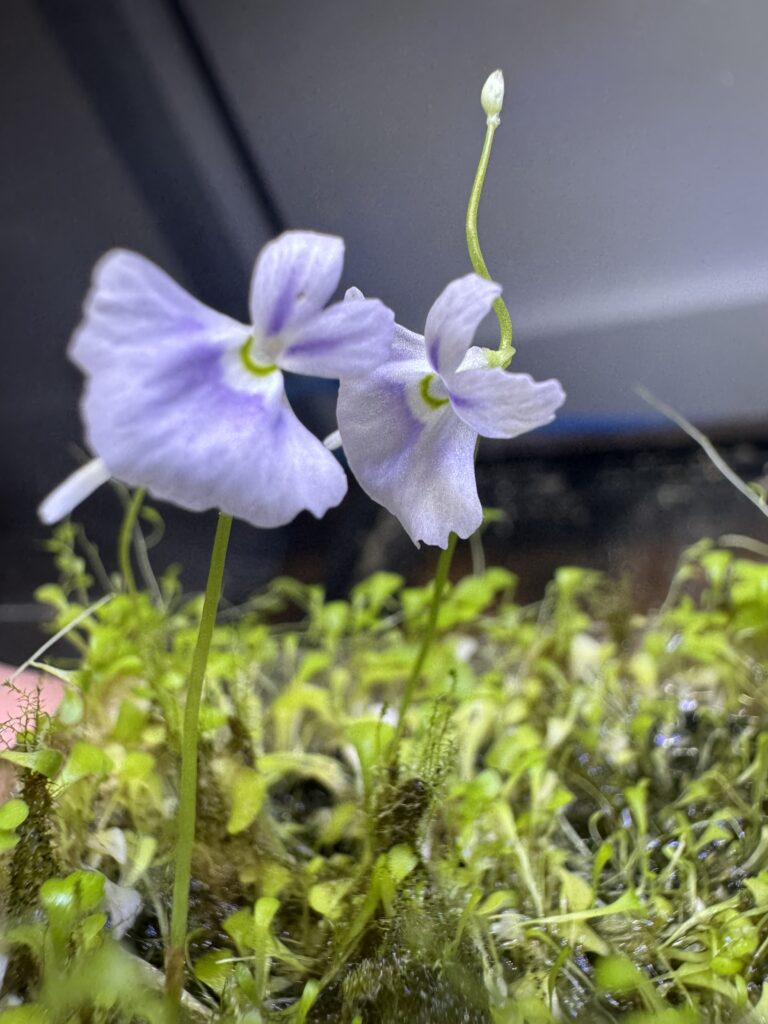
One of the best surprises about bladderworts is their flowers. While the traps are tiny and hidden, their blooms are often bold and colorful.
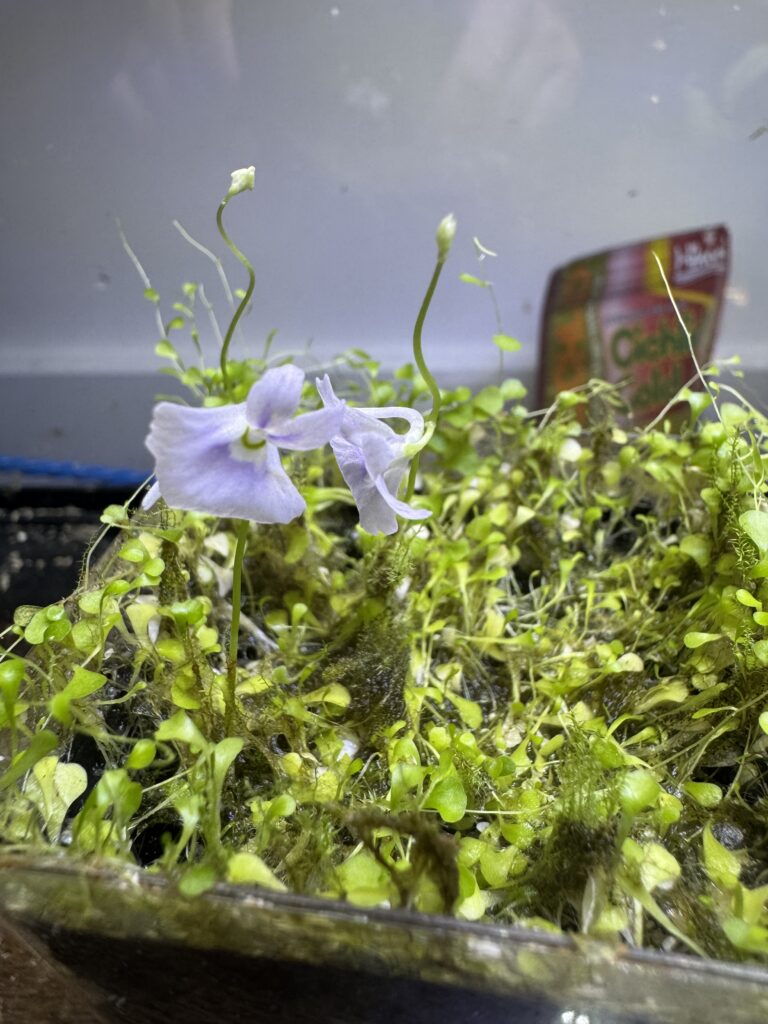
Depending on the species, flowers can appear:
- Yellow
- Purple
- Pink
- White
- Blue
With proper lighting and stable care, many terrestrial Utricularia flower frequently and reliably.
Common Utricularia Care Mistakes
- Using tap water instead of distilled water
- Letting terrestrial species dry out completely
- Using fertilized or nutrient-rich soil
- Providing insufficient light
- Ignoring species-specific requirements
Because this genus is so diverse, identifying your species helps avoid care mistakes.
FAQ
Use bright indirect light, distilled water, and a nutrient-poor soil mix like peat and perlite. Keep the soil consistently moist.
Yes. Always use distilled water, reverse osmosis water, or rainwater.
Terrestrial species tolerate moist soil and shallow trays. Aquatic species should remain submerged in pure water.
No, they capture microscopic prey on their own. Carnivorous plant-specific fertilizers may be used carefully if desired.
Many terrestrial species are beginner-friendly if grown in pure water and nutrient-poor soil with adequate light.