Carnivorous plants eat insects because they don’t get enough nutrients from the soil. They evolved in nutrient-poor, acidic environments where nitrogen and other essential minerals are scarce. Instead of relying on their roots like most plants, they adapted to capture insects and digest them — similar to how we eat food to obtain nutrients our bodies need.
Light still powers the plant through photosynthesis, but insects provide the extra nutrients that the soil cannot.
The Real Reason: Nutrient-Poor Soil
Most carnivorous plants grow in:
- Bogs
- Swamps
- Sandy, acidic wetlands
These environments are extremely low in nitrogen, phosphorus, and other key minerals. In normal garden soil, plants absorb nutrients through their roots. Carnivorous plants, however, evolved in places where those nutrients simply aren’t available.
Because of this, their root systems are adapted mainly for:
- Anchoring the plant
- Absorbing water
They are not designed to handle nutrient-rich soil or fertilizer. In fact, mineral-heavy soil can burn their roots.
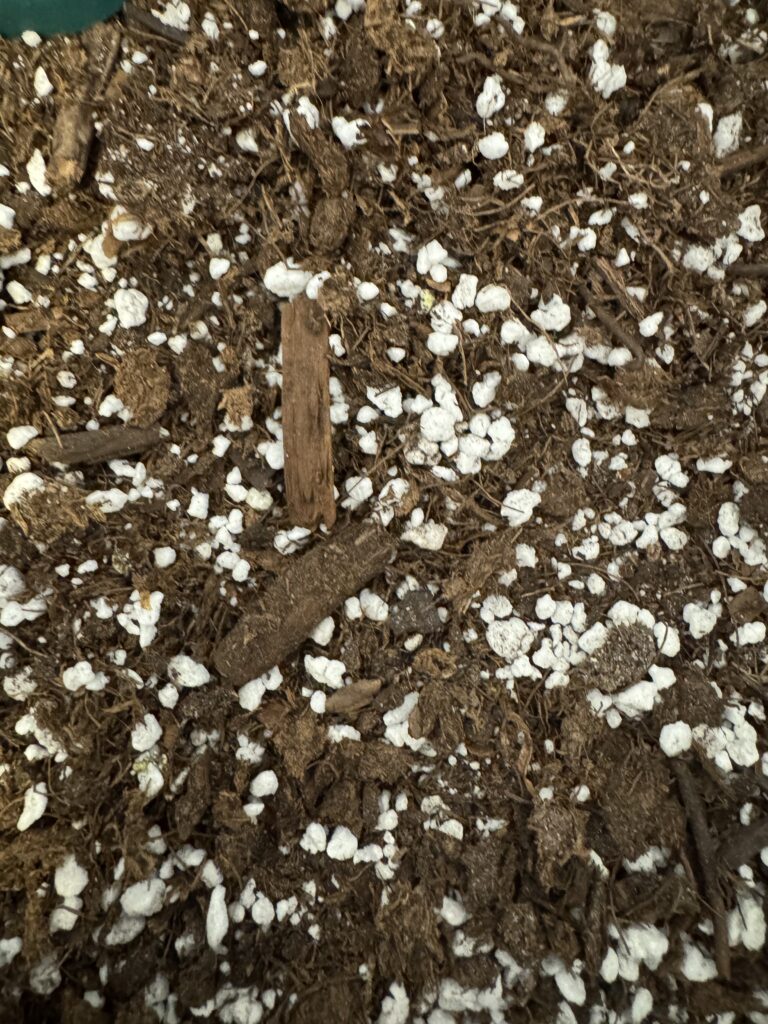
That’s also why we grow them in nutrient-poor mixes and water them with distilled water (the most commonly purchased pure water), reverse osmosis water, or rainwater.
The Nutrients They’re After
The primary nutrient carnivorous plants seek from insects is nitrogen.
Nitrogen is critical for:
- Leaf development
- Chlorophyll production
- Enzyme function
- Overall growth
They also obtain:
- Phosphorus
- Potassium
- Trace minerals
Insects act as compact nutrient packages. Once captured and digested, the plant absorbs these nutrients through specialized glands.
How Carnivorous Plants Catch Insects
Different species evolved different trapping mechanisms.
Snap Traps
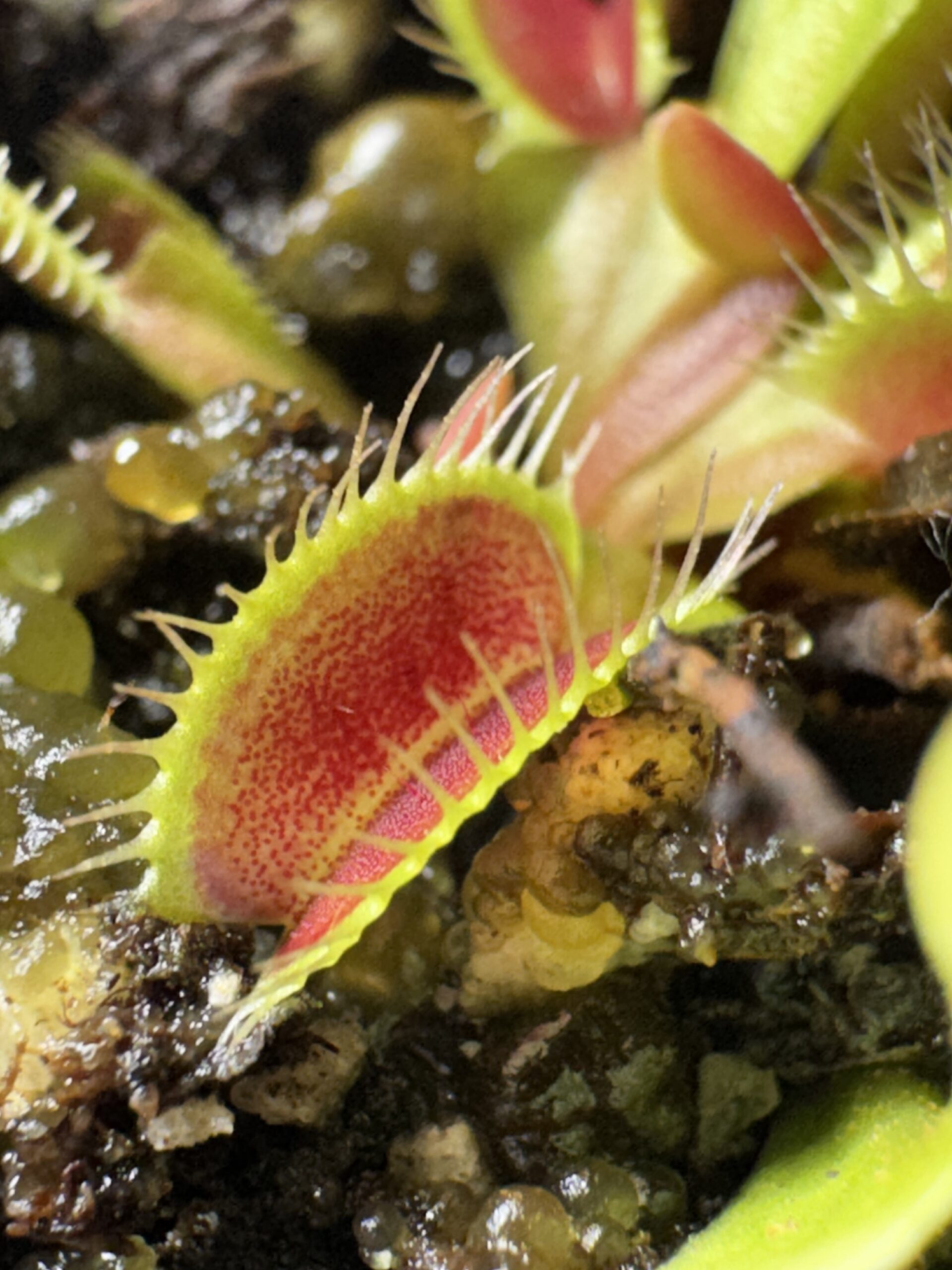
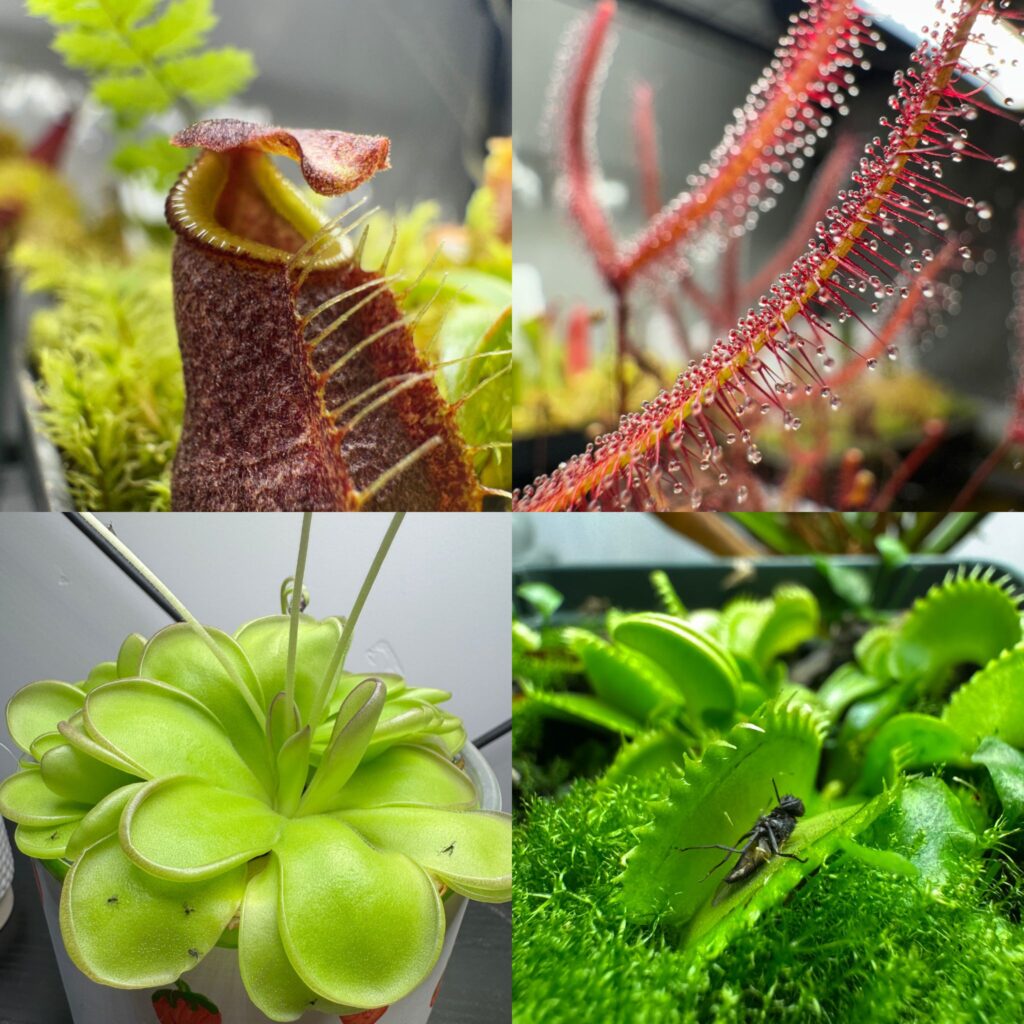
The Venus flytrap uses rapid leaf movement to close around prey. Trigger hairs detect movement, and the trap seals shut to begin digestion.
Pitfall Traps
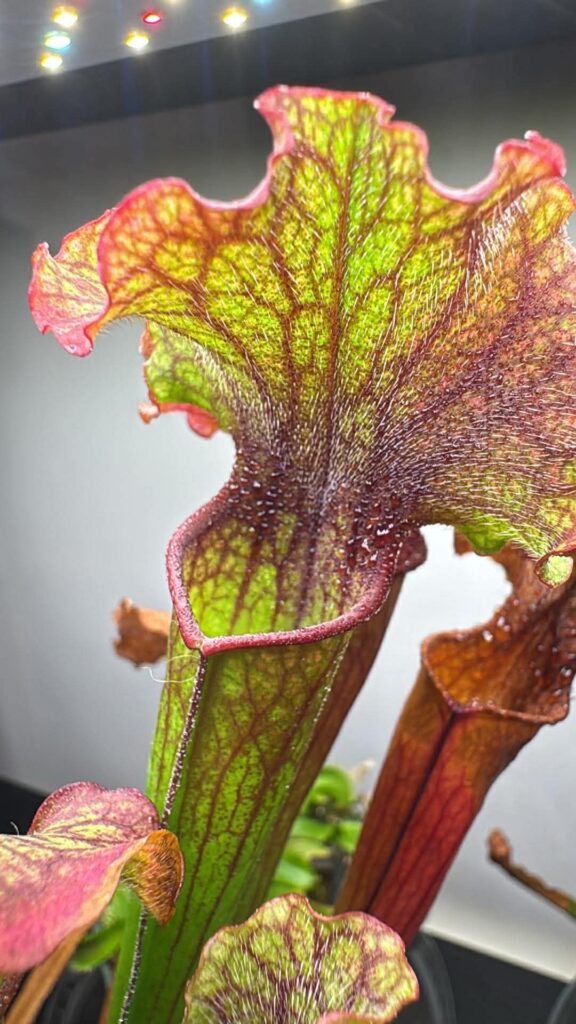
Nepenthes and Sarracenia form pitcher-shaped leaves filled with digestive fluid. Insects slip inside and are broken down by enzymes and bacteria.
Sticky Traps
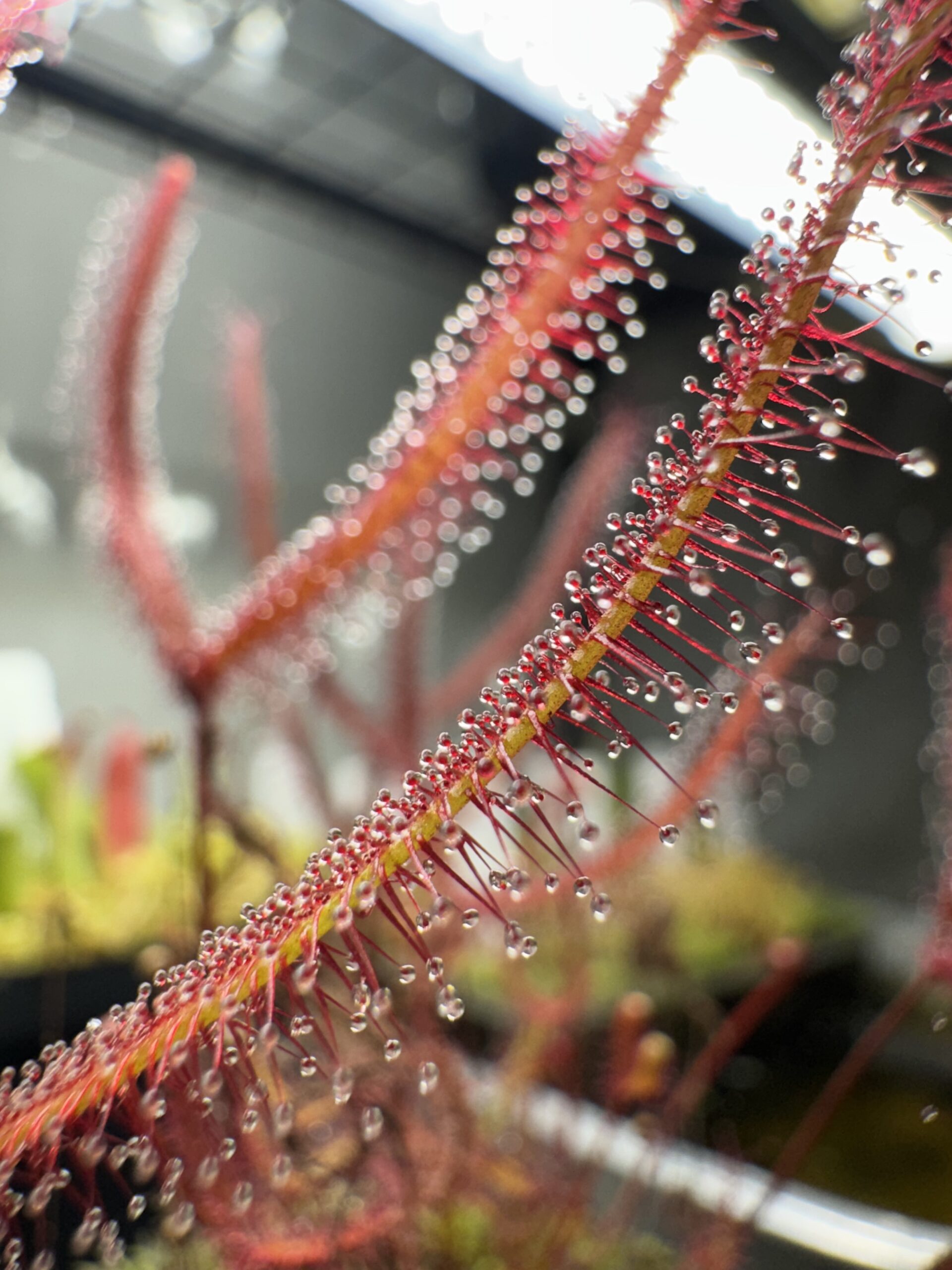
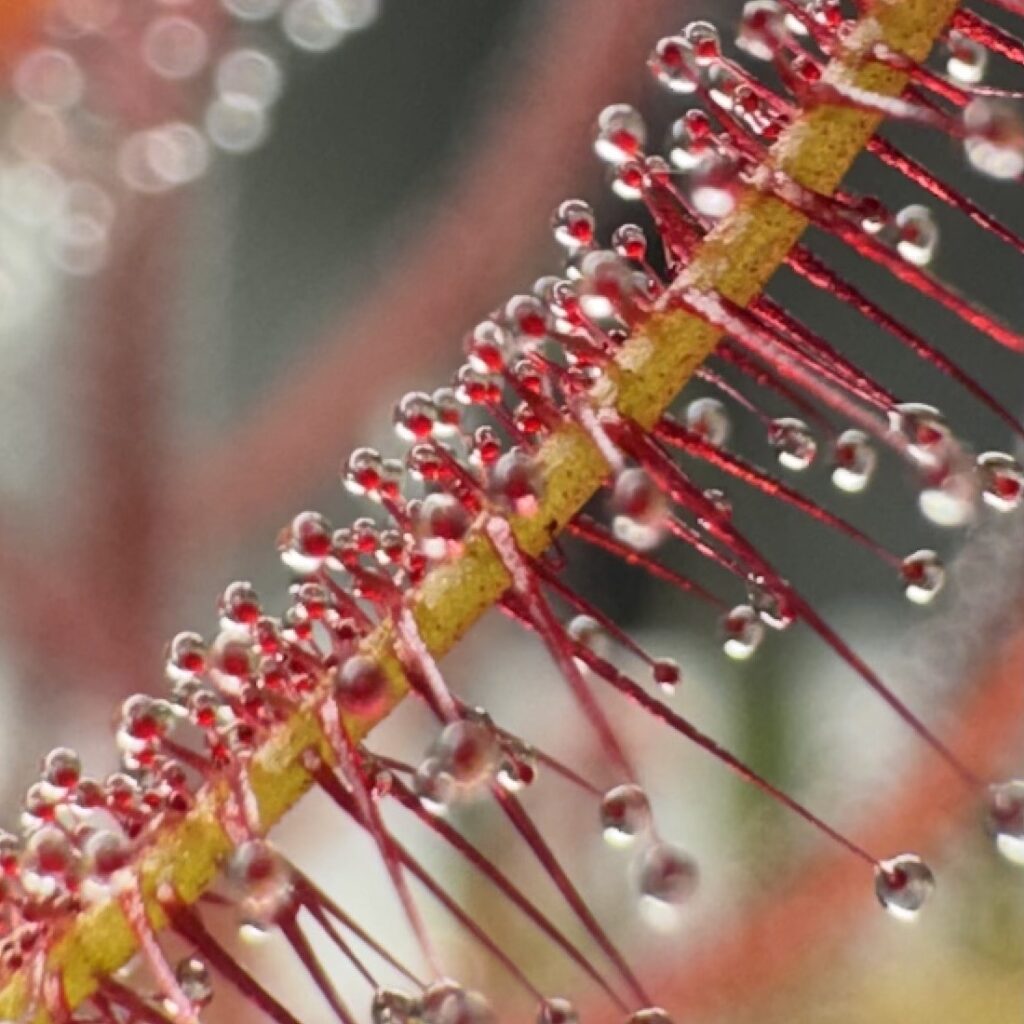
Drosera (sundews) and Pinguicula (butterworts) produce sticky glandular secretions. Insects get stuck, and the leaf slowly curls or secretes enzymes to digest them.
Suction Traps
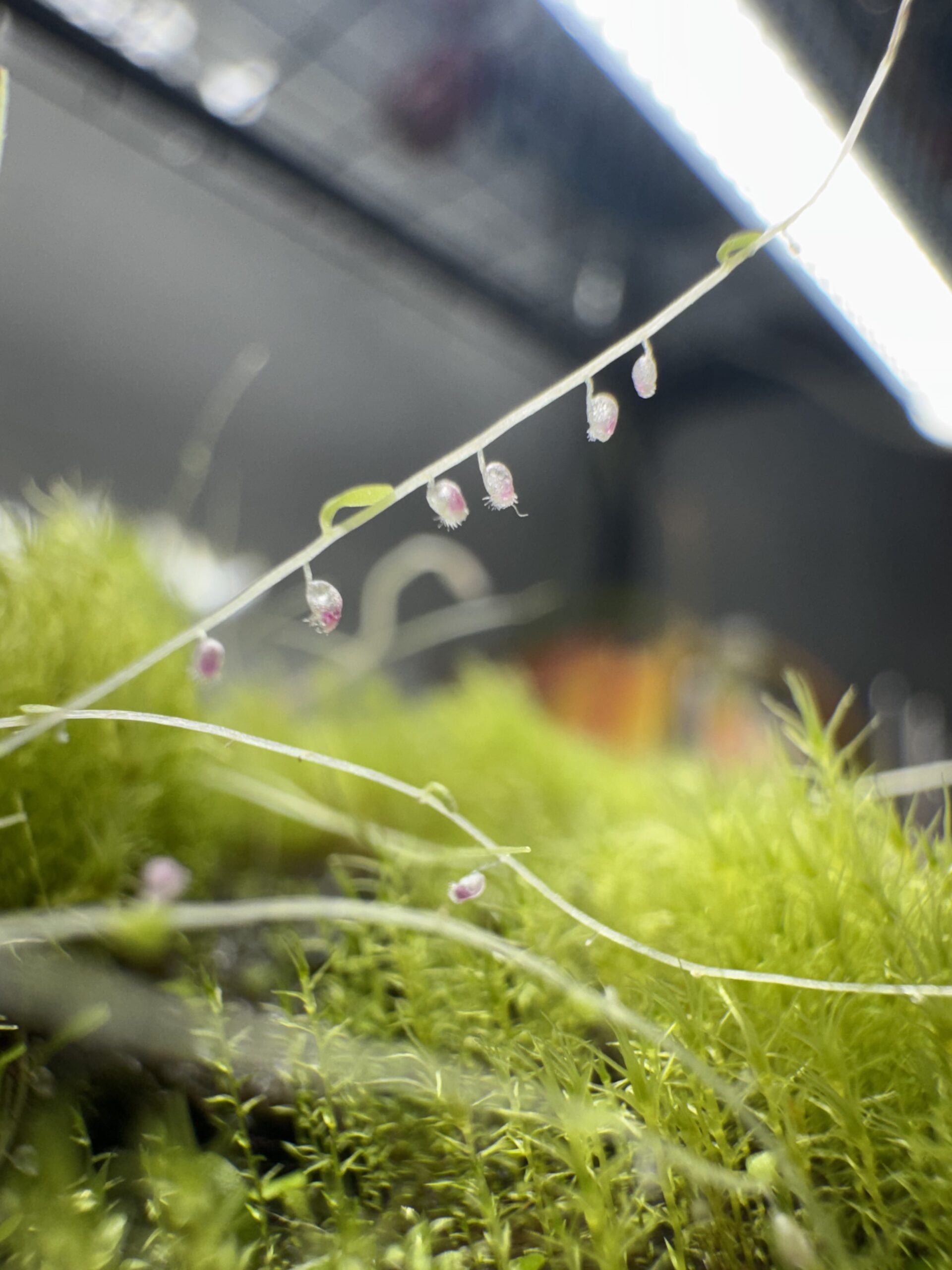
Utricularia (bladderworts) use tiny vacuum-like bladders to suck in microscopic organisms underwater or in wet soil.
Each method achieves the same goal: nutrient acquisition.
The Science of Digestion
Once an insect is captured, carnivorous plants release digestive enzymes such as:
- Proteases (break down proteins)
- Phosphatases (release phosphorus)
- Chitinases (break down insect exoskeletons)
These enzymes liquefy soft tissues. The plant then absorbs dissolved nutrients through specialized glands on the trap surface.
This process supplements the plant’s diet but does not replace photosynthesis. Sunlight remains essential for energy production.
Evolutionary Advantage
Carnivory evolved independently in multiple plant lineages — a strong indicator that it provides a major survival advantage in poor soils.
Instead of competing with other plants for scarce soil nutrients, carnivorous plants developed a different strategy:
- Capture mobile nutrient sources
- Convert animal matter into usable minerals
- Thrive where other plants struggle
This adaptation allowed them to dominate niches that would otherwise be inhospitable.
Why They Still Need Proper Soil and Water
Because their roots are not designed for nutrient absorption like traditional plants, using regular potting soil or fertilizer can damage them.
That’s why proper care always includes:
- Nutrient-poor soil
- No added fertilizers in the substrate
- Distilled water, reverse osmosis water, or rainwater
Minerals in tap water or soil can accumulate and burn the roots.
Final Thoughts
Carnivorous plants eat insects because their natural environments lack essential nutrients. Instead of relying on soil, they evolved traps, pitchers, and sticky leaves to capture prey and extract what they need.
They still depend on sunlight for energy, but insects provide the missing nutrients that allow them to grow stronger and more vigorously.
It’s one of the most fascinating examples of plant adaptation in the natural world.
FAQ
Why do carnivorous plants eat insects instead of using soil nutrients?
They evolved in nutrient-poor environments where soil lacks nitrogen and phosphorus.
Do carnivorous plants need insects to survive?
They can survive through photosynthesis alone, but insects help them grow more vigorously.
What nutrients do carnivorous plants get from insects?
Primarily nitrogen, along with phosphorus and trace minerals.
Can I fertilize carnivorous plants instead of feeding insects?
Only use products specifically designed for carnivorous plants and never fertilize the soil.
Why can’t carnivorous plants grow in regular potting soil?
Their roots are sensitive to minerals and fertilizer, which can burn and damage them.