Drosera care is simple when you focus on the fundamentals: strong light, pure water, nutrient-poor soil, and consistently wet conditions. When these needs are met, sundews grow steadily, produce sticky dew, and catch insects on their own without much intervention.
What Is a Drosera (Sundew)?
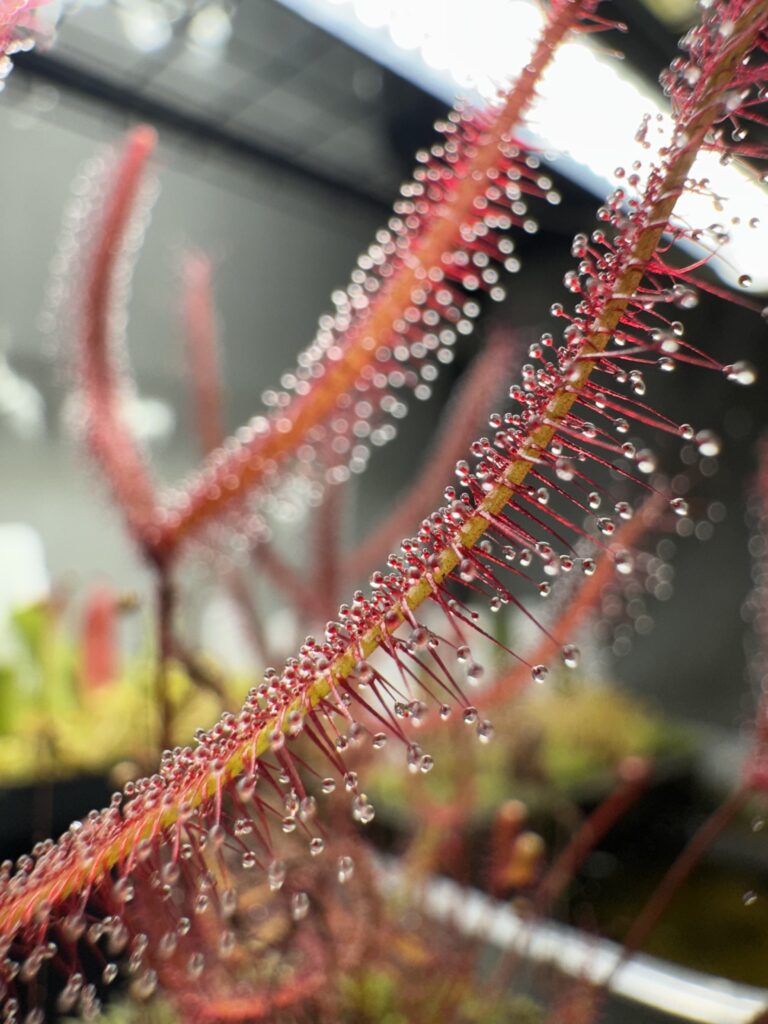
Drosera, commonly called sundews, are carnivorous plants that trap insects using sticky glands on their leaves. Once an insect is caught, the leaf slowly curls around it and digests it for nutrients. There are over 200 species of Drosera found across the world, ranging from tropical species to cold-hardy temperate types.
Because Drosera evolved in nutrient-poor bogs, their care requirements are very different from typical houseplants.
How Much Light Do Drosera Need?
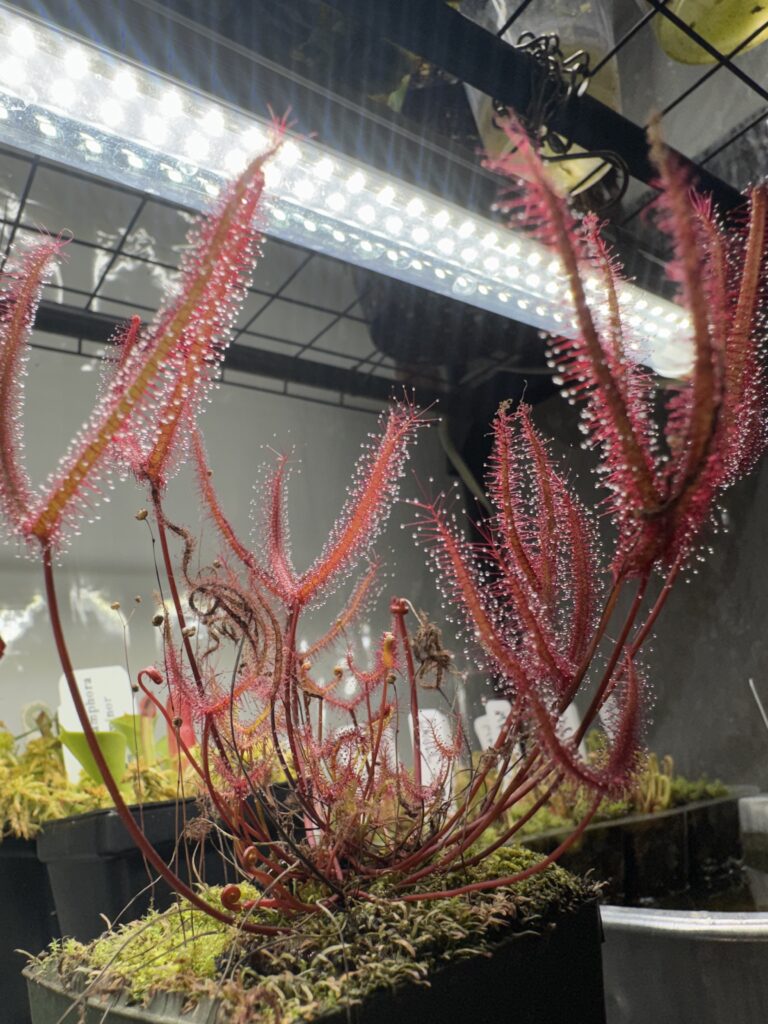
Light is the most important part of Drosera care. Without enough light, sundews will survive but fail to produce dew.
- Full sun outdoors is ideal when temperatures allow
- Indoors, strong LED grow lights work best
- Aim for 12–16 hours of light per day
Healthy Drosera should appear colorful and shiny. Pale leaves or dry-looking tentacles are strong signs the plant needs more light. They also turn bright red when given lots of light!
How to Water Drosera Correctly
Drosera are bog plants and should remain wet at all times during active growth.
- Use distilled water, reverse osmosis water, or rainwater only
- Keep pots sitting in ½ to 1 inch of water
- Never allow the growing media to dry out
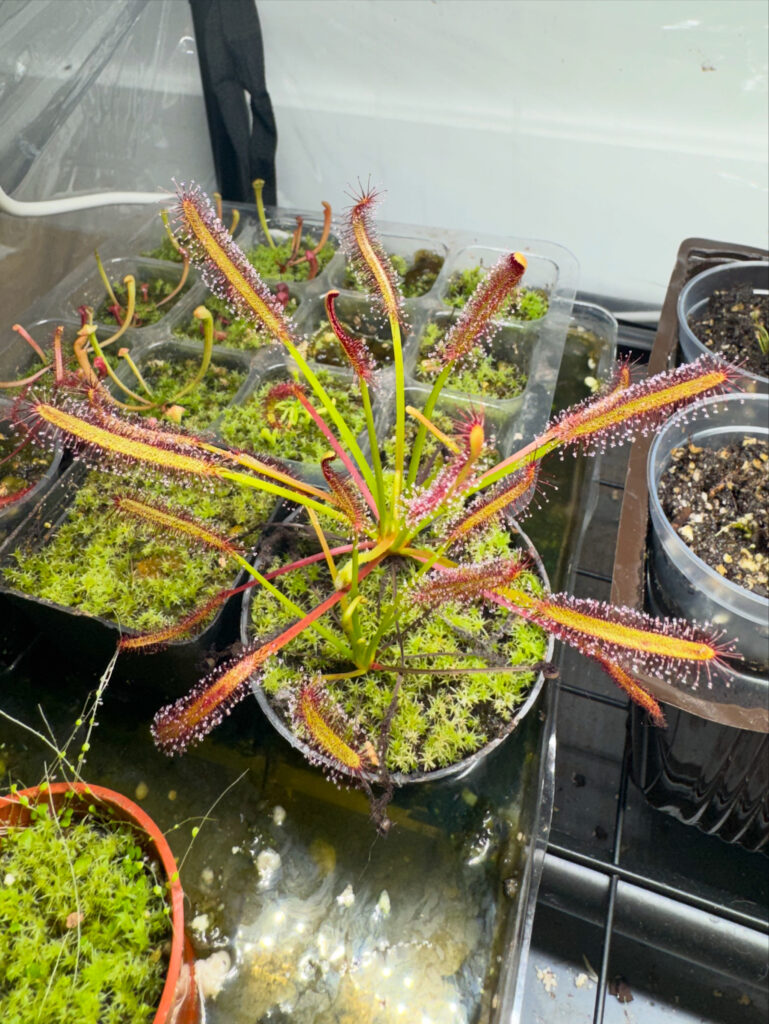
Tap water often contains minerals that build up in the soil and damage Drosera roots over time. So it is very important you get distilled water or water with no minerals.
What Is the Best Soil for Drosera?
Sundews require low-nutrient, well-draining soil that mimics natural bog conditions.
Recommended Drosera soil options:
- 1:1 peat moss and perlite
- Long-fiber sphagnum moss
Avoid regular potting soil, compost, or any fertilized mix. These materials are too rich and will quickly harm the plant.
Humidity and Airflow Needs
Most Drosera adapt well to average indoor humidity levels.
- Ideal humidity range is roughly 40–70%
- Gentle airflow helps prevent mold and stagnant conditions
While terrariums can work, they are not required. Many sundews grow perfectly well in open air under good lighting with proper acclimation.
How to Feed Drosera
Drosera get their nutrients from insects and do not need fertilizer in the soil.
- Outdoor plants usually feed themselves
- Indoor plants can be fed small insects or fertilizer every 1–2 weeks
- Only feed when the plant is actively growing
Overfeeding can stress the plant and slow growth, so feeding should be light and occasional.
Temperature and Seasonal Care
Drosera species fall into two main categories.
Tropical Drosera:
- Prefer temperatures between 65–85°F
- Grow year-round
- Do not require dormancy
Temperate Drosera:
- Experience seasonal dieback
- Require a winter rest period
- Resume growth in spring
Knowing which type of sundew you have is important for long-term care.
Drosera Dormancy Explained
Temperate Drosera require a dormancy period lasting around three to four months. During this time, growth slows and leaves may shrink or die back completely. This is normal and necessary for the plant’s long-term health.
Tropical Drosera should not be forced into dormancy and should continue growing under consistent conditions.
Common Drosera Care Mistakes
The most common issues seen with Drosera care include:
- Using tap water
- Insufficient lighting
- Letting the soil dry out
- Planting in standard potting soil
- Feeding too often
Fixing these problems usually results in noticeable improvement within weeks.
FAQ about Drosera Care
Drosera should be kept constantly moist during active growth, with pots sitting in water at all times.
This is most often caused by insufficient light. Increasing light intensity or duration usually restores dew production.
Yes, sundews grow very well indoors when provided with strong grow lights and proper watering.
They can survive without insects, but occasional feeding or fertilizer helps improve growth and overall health.
Yes, Drosera are one of the easiest carnivorous plants to grow and are very beginner-friendly.
Pingback: How Do You Take Care of a Carnivorous Plant for Beginners? - Carnivorous Supply
Pingback: What is the Best Soil for Carnivorous Plants - Carnivorous Supply